

|
Getting your Trinity Audio player ready...
|
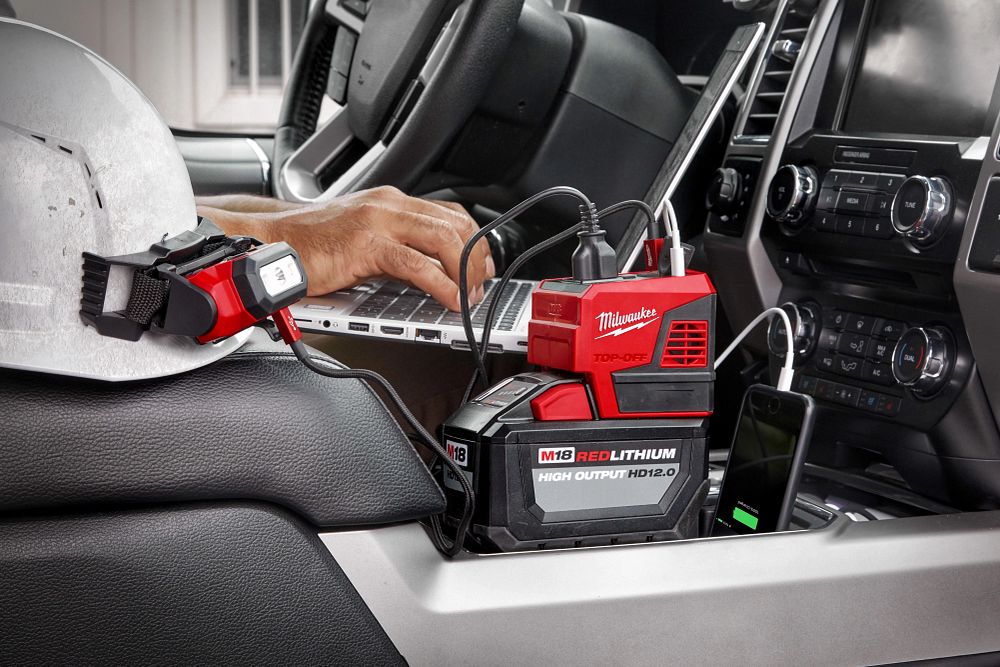
Milwaukee’s M18 TOP-OFF lineup is a great example of how modern jobsite demands are changing. Crews aren’t only thinking about power tools anymore, they’re thinking about everything that surrounds the work. Phones, tablets, headlamps, laptops, laser levels, small electronics, and mobile workstations have become part of daily workflow. So, when Milwaukee introduced TOP-OFF, the concept was simple: take the energy stored in an M18 battery and make it usable in the moments when wall power is inconvenient, far away, or simply unavailable.
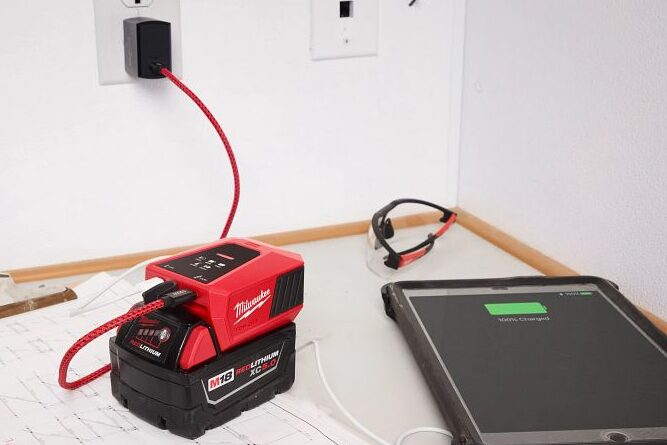
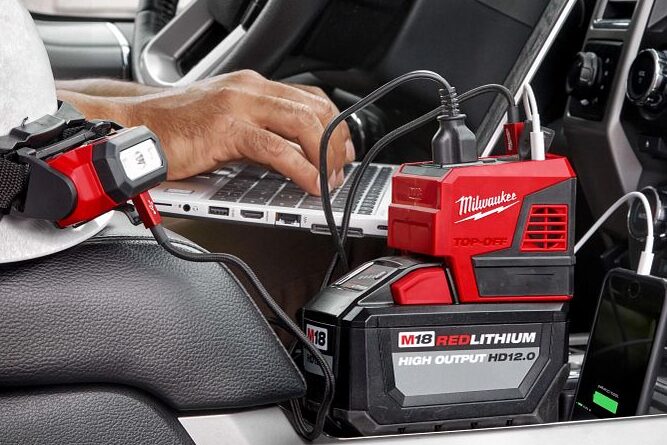
The confusion starts because Milwaukee currently offers two TOP-OFF tools that look almost identical at first glance. Both are portable power solutions built around M18 batteries, and both are meant to keep devices running while you’re away from a standard outlet. But in practice, they are designed for two different philosophies of power delivery. One is built as a power supply first, emphasizing flexibility through an AC outlet. The other is built as a charger first, centered around modern USB-C Power Delivery and the ability to charge the attached M18 battery when plugged into the wall. Once you recognize that difference, the lineup becomes far easier to understand.
Before comparing them directly, it’s important to frame what TOP-OFF is intended to be. Milwaukee is not positioning these tools as replacements for full-size chargers, nor are they designed to handle high-draw applications like corded saws, grinders, or jobsite equipment.
These are not “heavy electrical load” tools. They are designed as support tools—compact, portable devices that help you distribute power efficiently across a workday. In other words, TOP-OFF is not a hero product. It’s a practical energy-transfer solution that complements a larger cordless system.
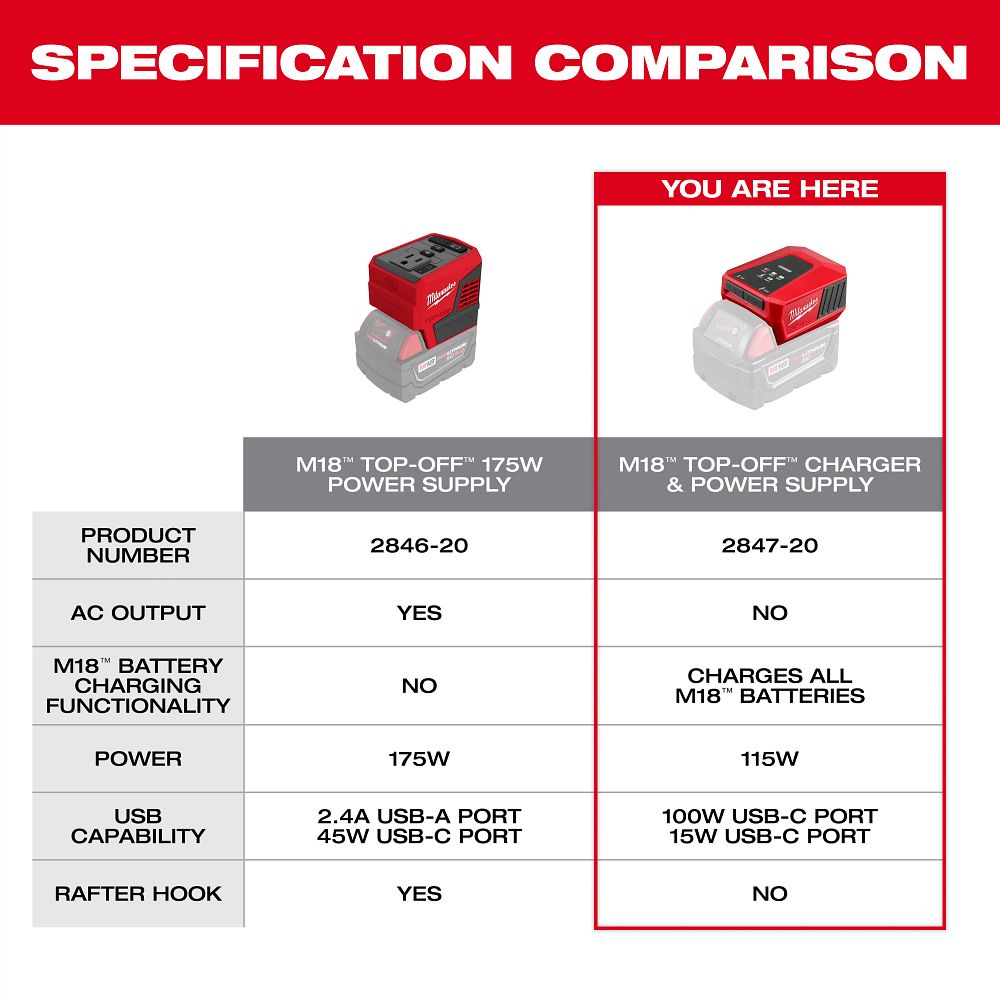
That distinction matters because the biggest limitation of any portable power supply is watt capacity. Both TOP-OFF models are restricted by maximum continuous output, which means every device you plug into them must fall within the tool’s supply capability. If a device demands more watts than the TOP-OFF can provide, it will not run. And while this is straightforward from an electrical standpoint, it becomes frustrating in real life because many consumer products, especially those in the 150W to 300W range, do not clearly display watt usage in a way the average user will notice. That’s why portable inverter products often “feel inconsistent” to users. The tool is functioning correctly, but the device is asking for more power than the system can deliver.
Milwaukee M18 TOP-OFF 175W Power Supply (2846-20)
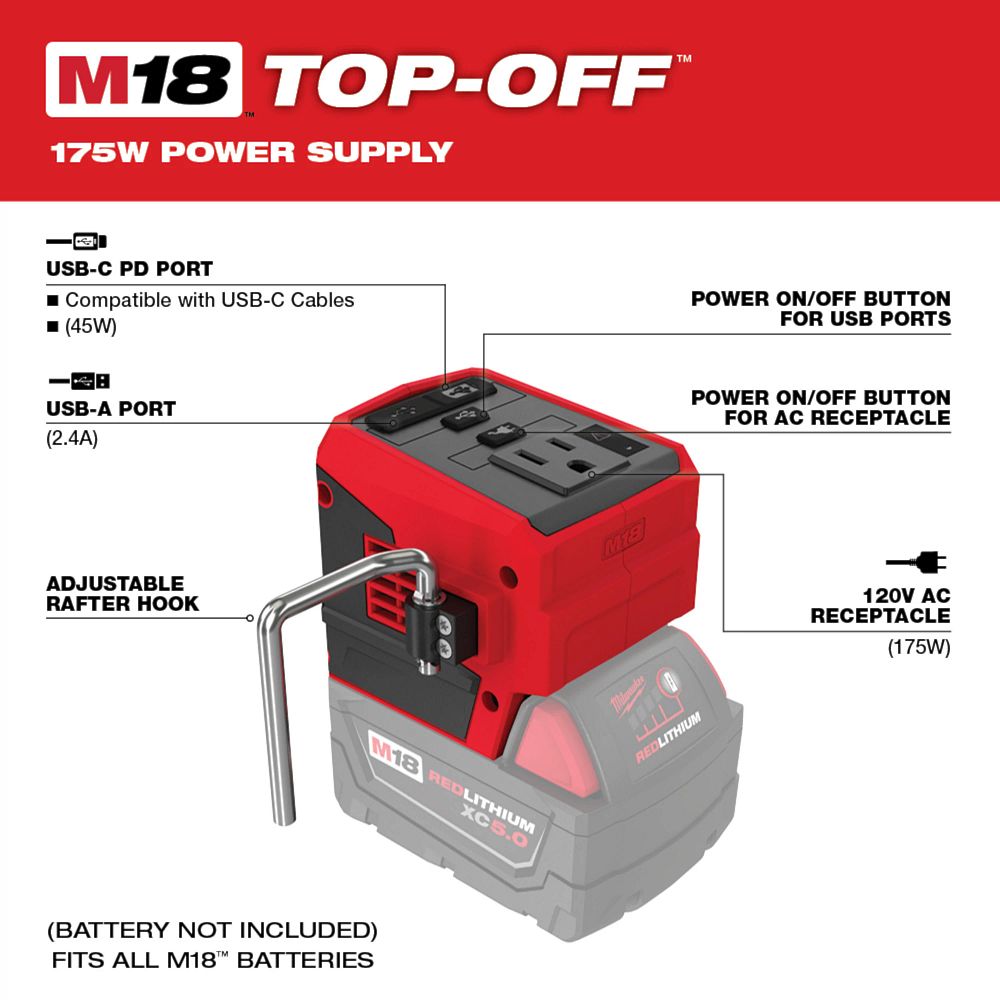
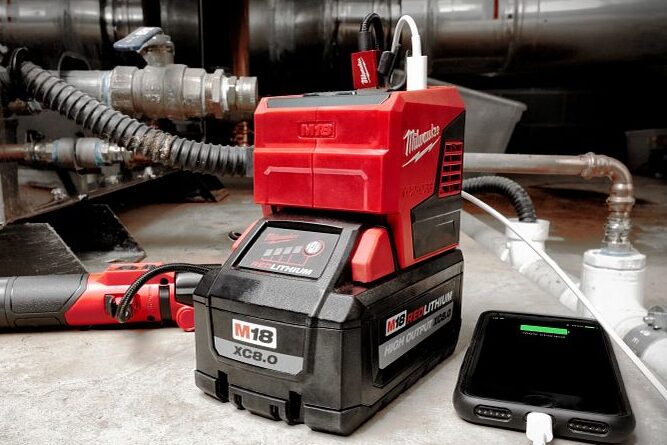
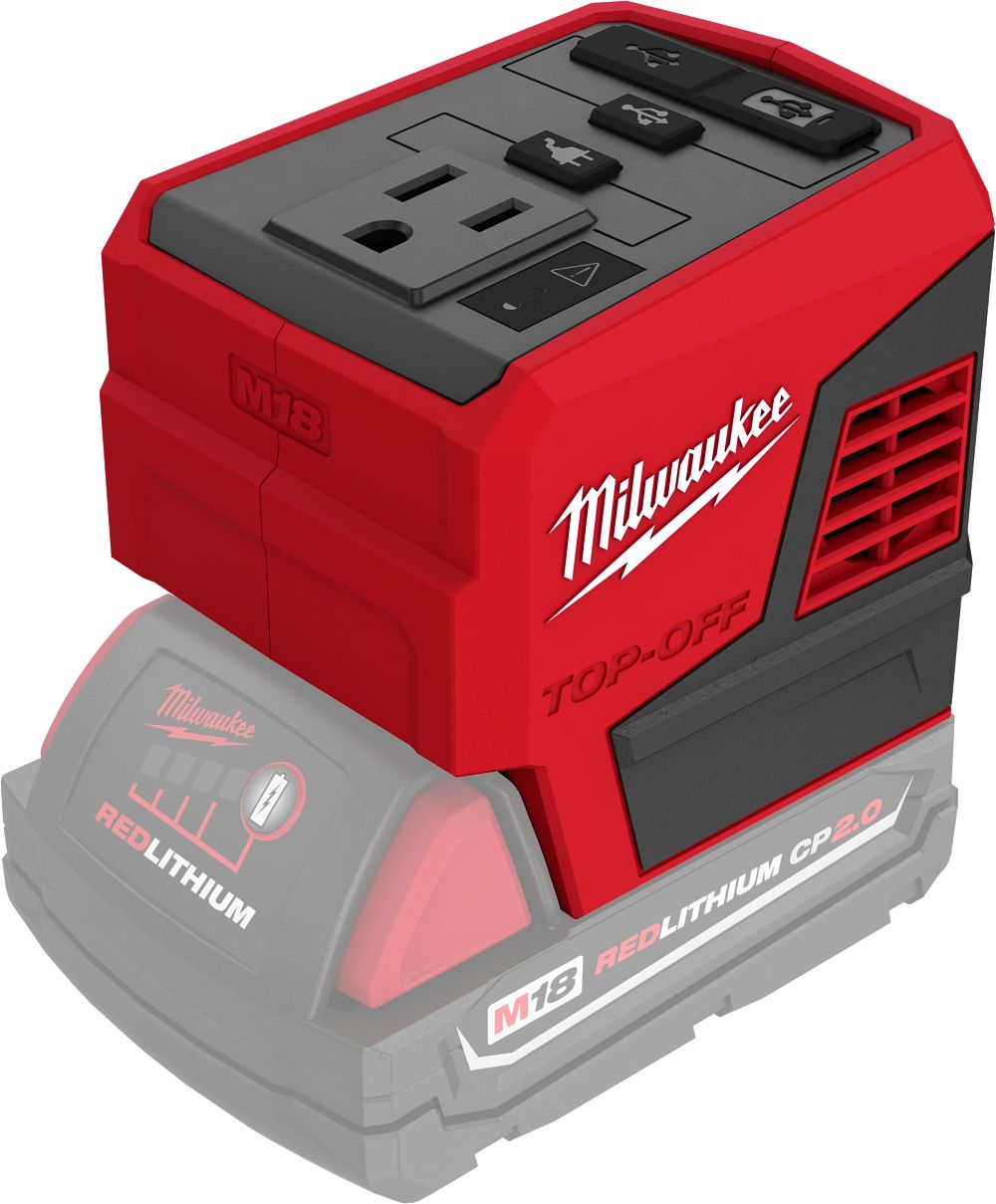
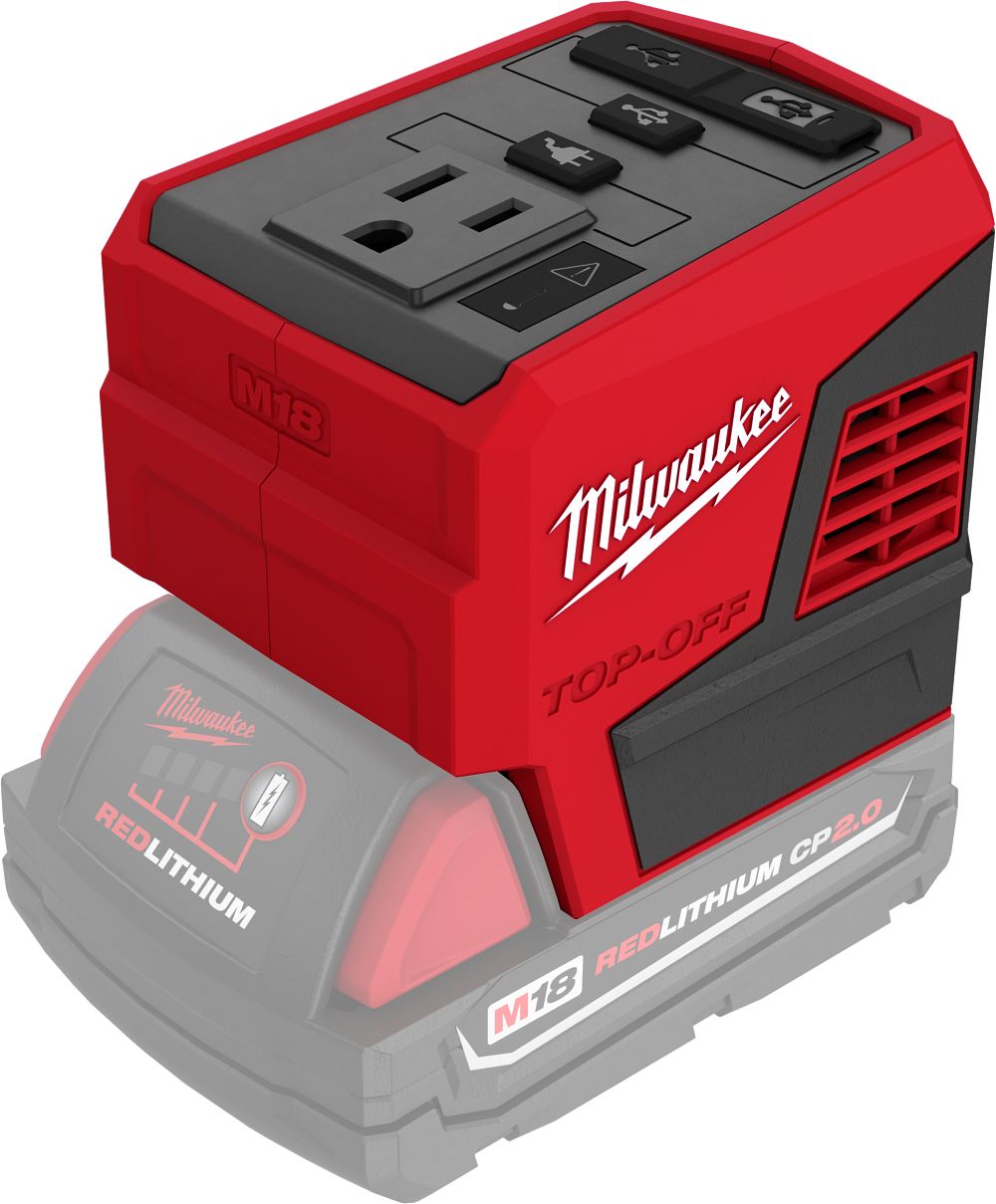
The M18 TOP-OFF 175W Power Supply represents the most traditional interpretation of portable power. It functions primarily as a compact inverter, allowing an M18 battery to power devices through a standard 120V AC outlet while also supporting USB charging. This model includes an AC outlet, a USB-C PD port rated at 45W, and a USB-A port. Its main strength is flexibility. The AC outlet opens the door to a wide range of plug-in devices that would otherwise be impossible to run from a standard USB battery pack. This makes it valuable for light-duty AC electronics, small TVs, routers, laptop chargers, lighting, and other low-watt devices, especially in situations where mobility and convenience matter more than raw output.
Milwaukee also clearly designed the 2846 around jobsite practicality. The integrated metal rafter hook is a small feature, but one that reveals the intended workflow: keep electronics within reach, suspended off the ground or off limited work surfaces, rather than forcing frequent trips to the nearest wall outlet. It is a tool designed for crews who want their power where the work is happening, not where the building’s power supply happens to be located.
However, the tradeoff is unavoidable. One hundred seventy-five watts is not a large amount of power, and the 2846 can feel limiting if users expect it to behave like a household outlet. It will run many things effectively, but it will also fail instantly if the device crosses that watt threshold. A common example would be an inflatable pump, which can easily draw around 250 watts, making it incompatible despite the fact that it seems like a “small device.” Meanwhile, something like a compact beverage fridge may use closer to 100 watts and run without issue. The limitation is not that the tool is underbuilt, it is that AC devices span a wide range of power demands, and the boundaries are not always obvious until you encounter them.
Milwaukee M18 TOP-OFF Charger & Power Supply (2847-20)
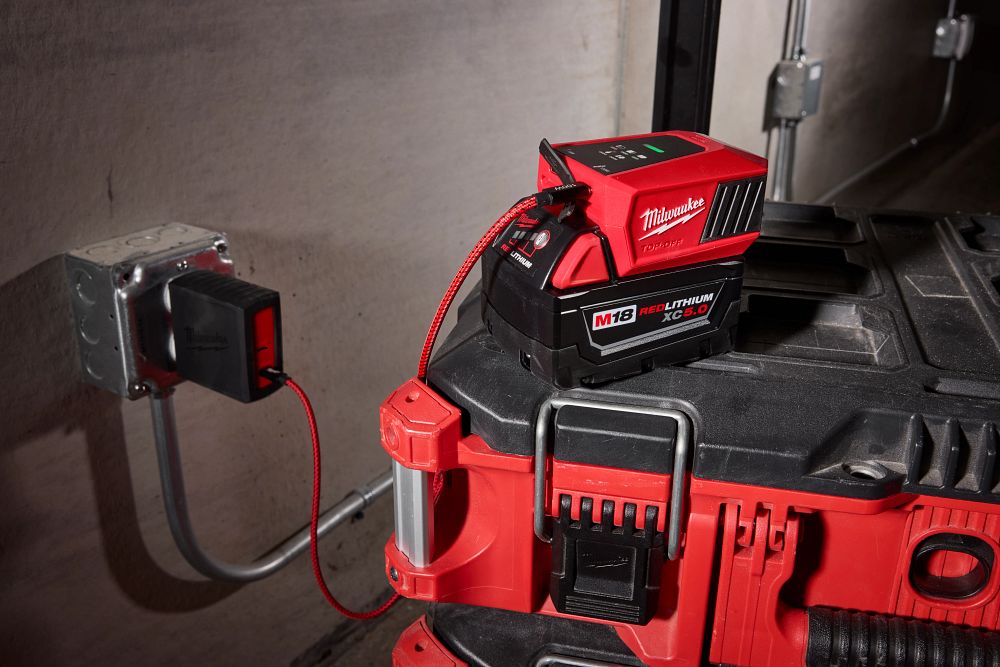
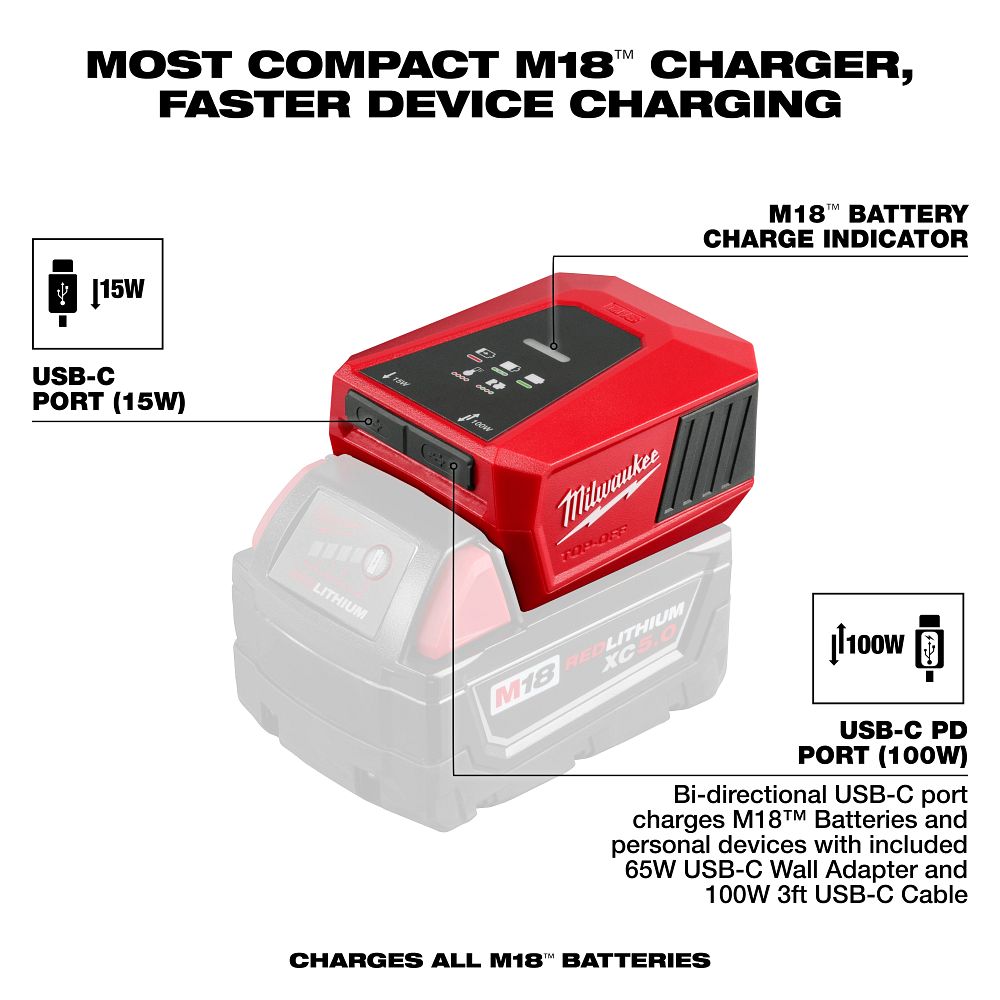
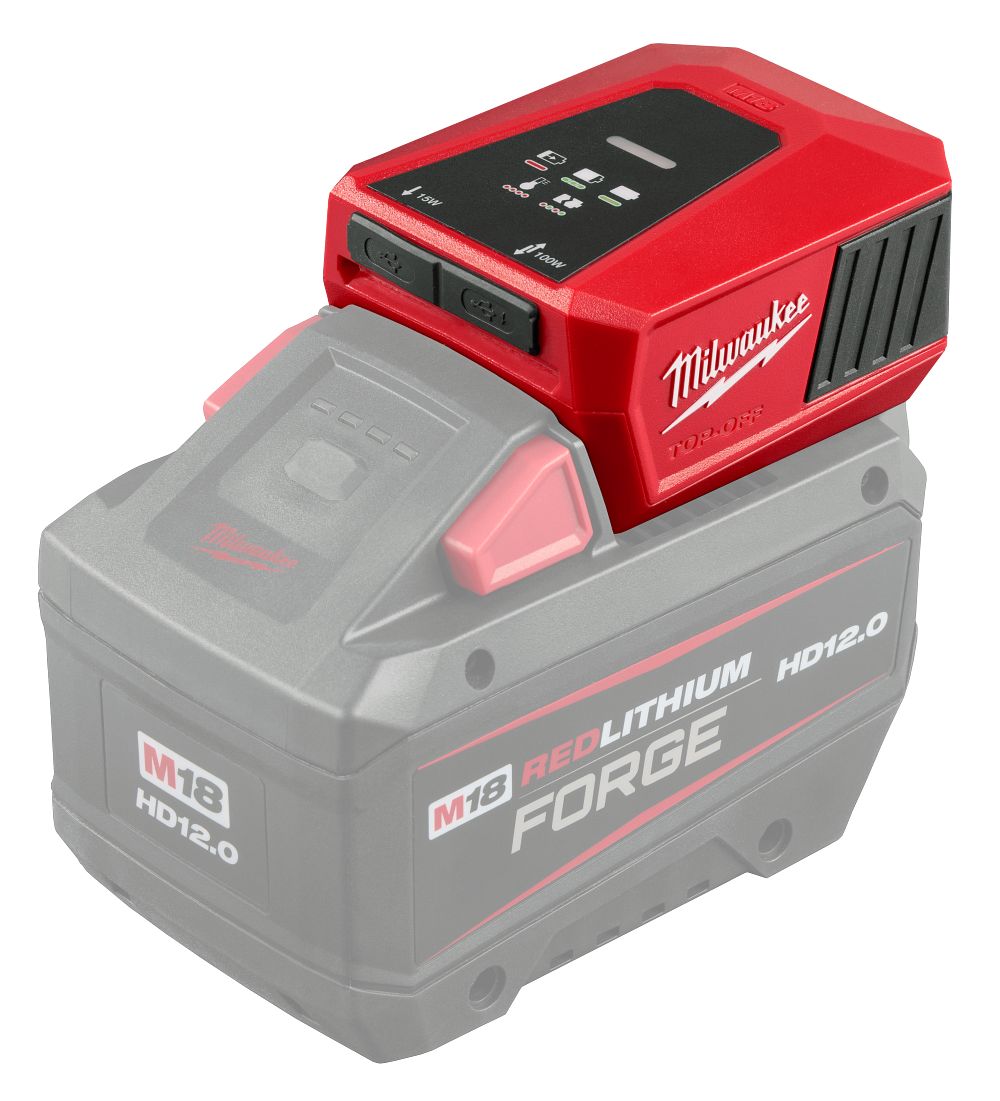
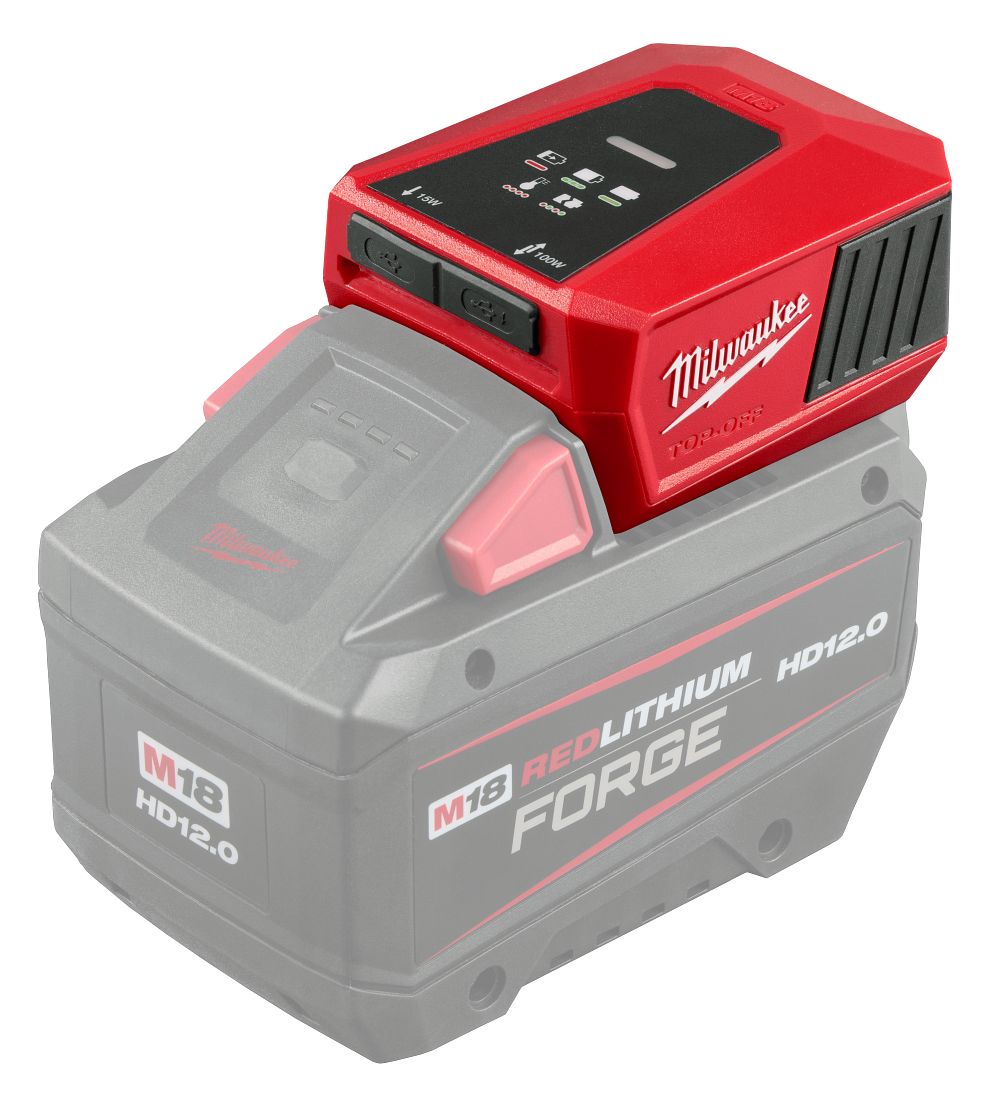
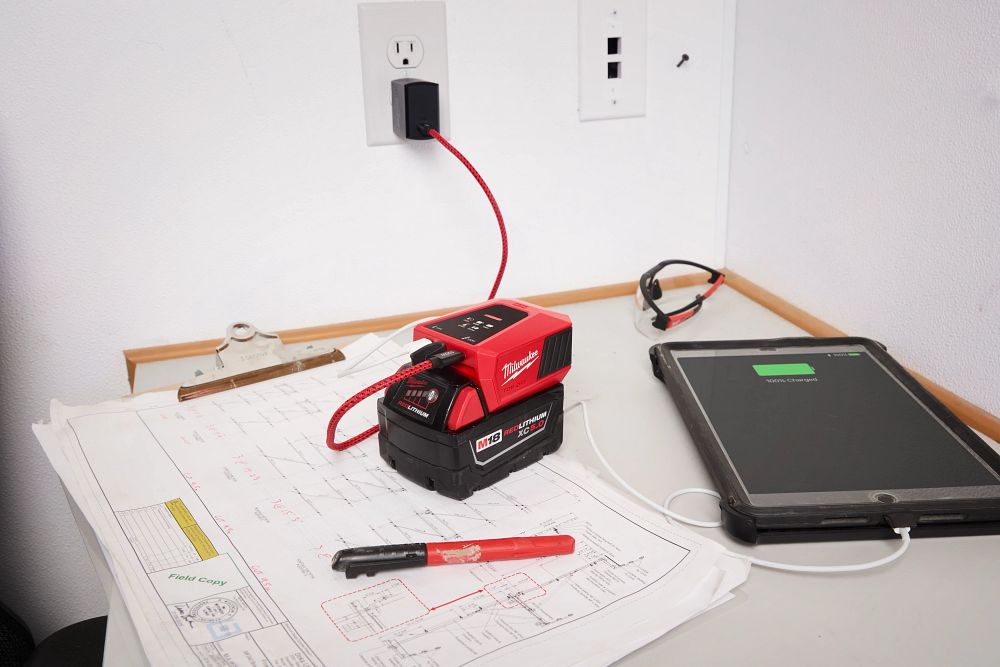
The M18 TOP-OFF Charger & Power Supply is fundamentally different, and in many ways, it reflects the direction portable electronics are heading. Rather than prioritizing AC flexibility, Milwaukee built the 2847 around USB-C Power Delivery as the primary output method. It provides dual USB-C ports, including a 100W Power Delivery port and an additional 15W port, and it delivers up to 115W of continuous power. The emphasis here is not on running plug-in devices, but on confidently powering modern electronics, especially laptops, tablets, and professional-grade USB-C devices.
What separates the 2847 most clearly from the 2846 is its charging function. When plugged into a wall, the 2847 can charge the M18 battery that is attached to it. This is the defining upgrade and the reason this model exists.
It turns the TOP-OFF into a compact, travel-friendly hybrid tool: a portable charger that can also act as a power supply when you are away from outlets.
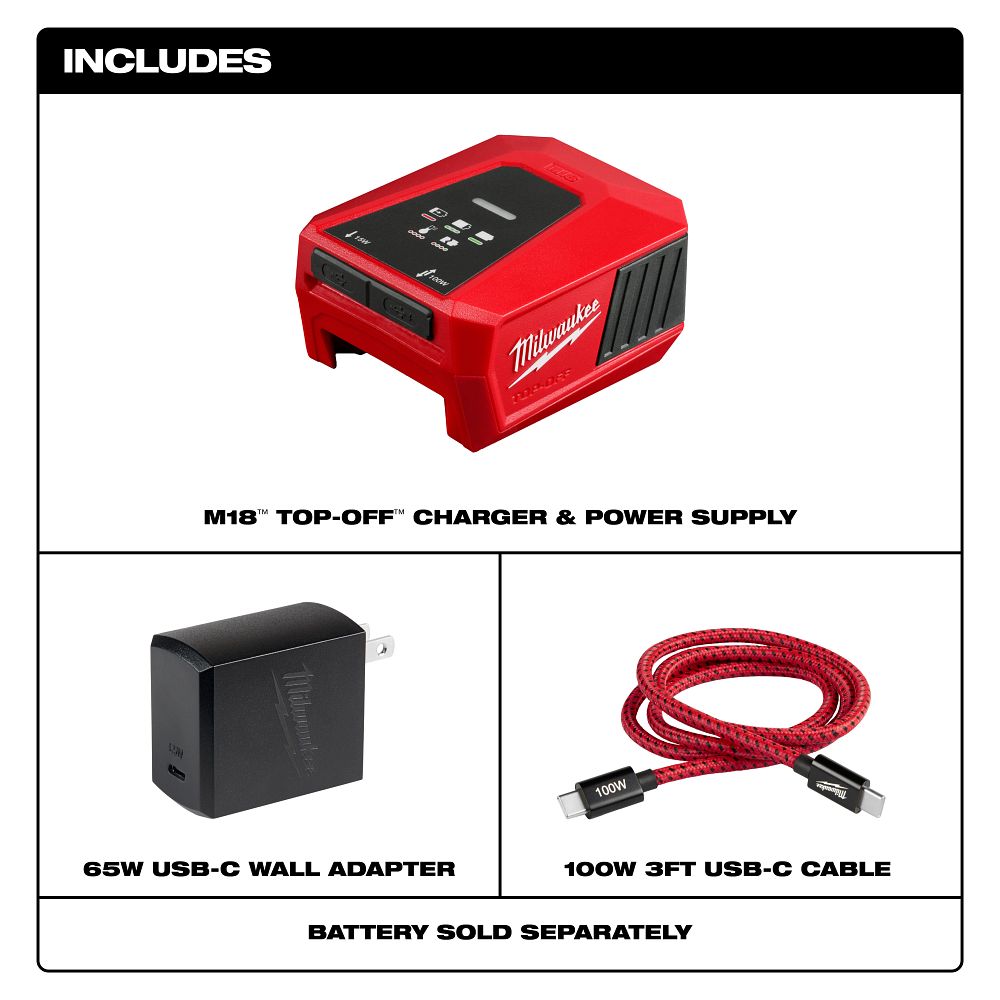
Milwaukee reinforces this intent by including both the USB-C cable and a 65W wall adapter, giving the user a complete kit out of the box rather than requiring extra accessories.
In day-to-day use, the 2847 also tends to feel less frustrating because USB-C power is more standardized than AC device output. Most users don’t have to investigate watt requirements for typical USB devices because USB-C Power Delivery negotiates power intelligently and predictably.
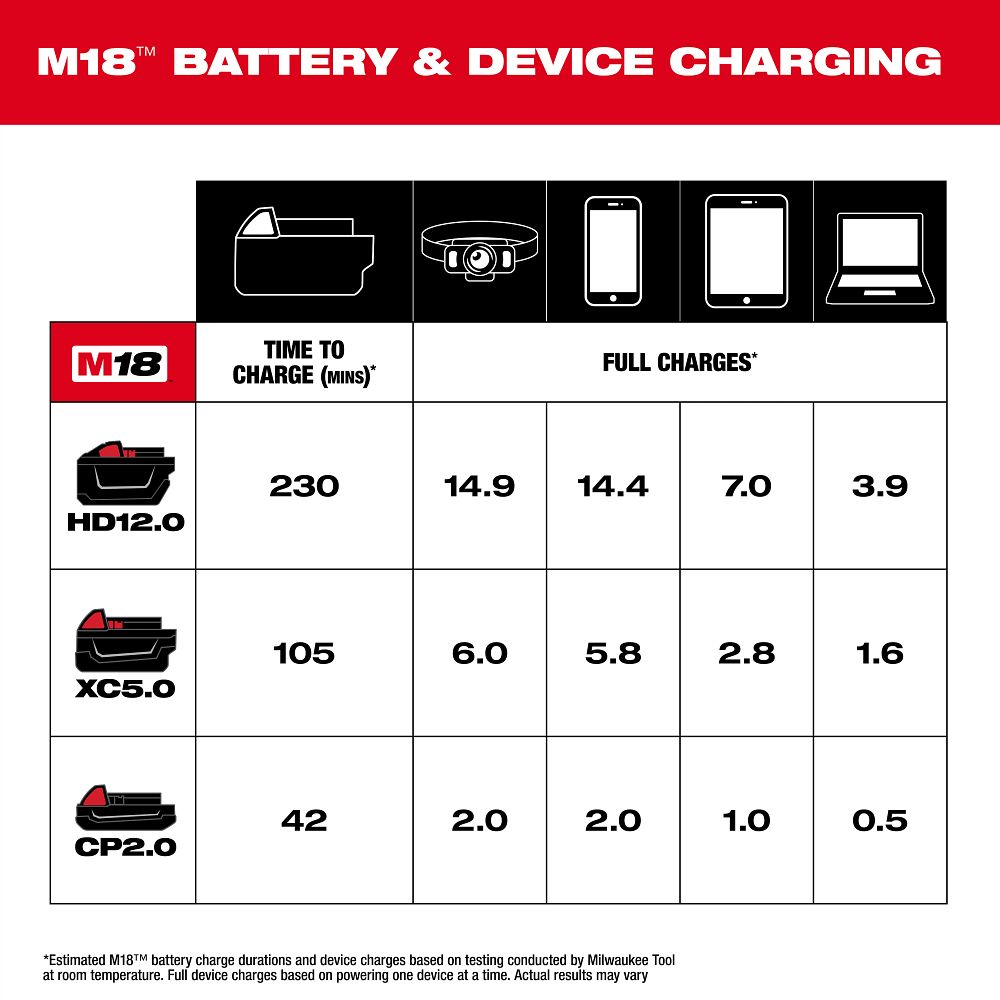
As long as the device supports USB-C charging, 100W is generally enough for laptops and larger electronics without the trial-and-error experience that often comes with AC inverter tools. The limitation is that the 2847 is not intended to replace high-speed M18 chargers. It will charge batteries, but it is designed for convenience and portability rather than high-volume rapid charging. This fits Milwaukee’s branding quite well: it’s a TOP-OFF, not a production charger.


Choosing between the two becomes simple once the design intent is clear. If your priority is running plug-in devices and you want the widest possible compatibility through an AC outlet, the 2846 is the better fit. If your priority is charging modern electronics efficiently through USB-C, and you value the added ability to charge the M18 battery when plugged into the wall, the 2847 is the stronger choice. Neither tool is universally “better”, they are optimized for different workflows.
For some users, owning both TOP-OFF tools makes real sense, since many professionals live in two worlds at once: AC power for plug-in accessories and USB-C power for modern electronics. In that case, the tools aren’t redundant, they complement each other, but for most people, one unit will cover daily needs, and the best choice comes down to what you actually plan to power.
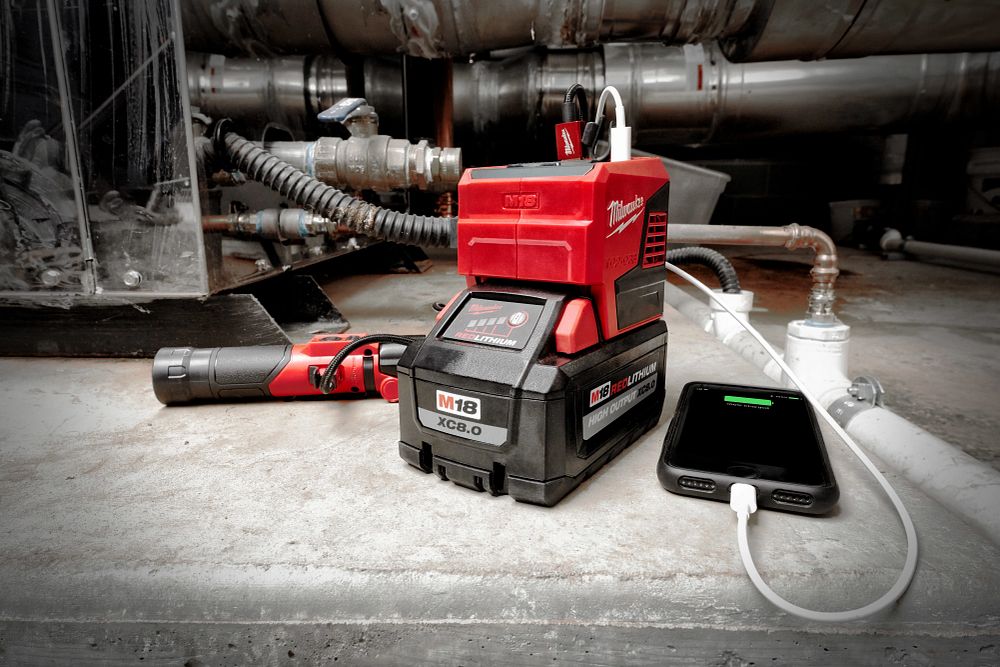
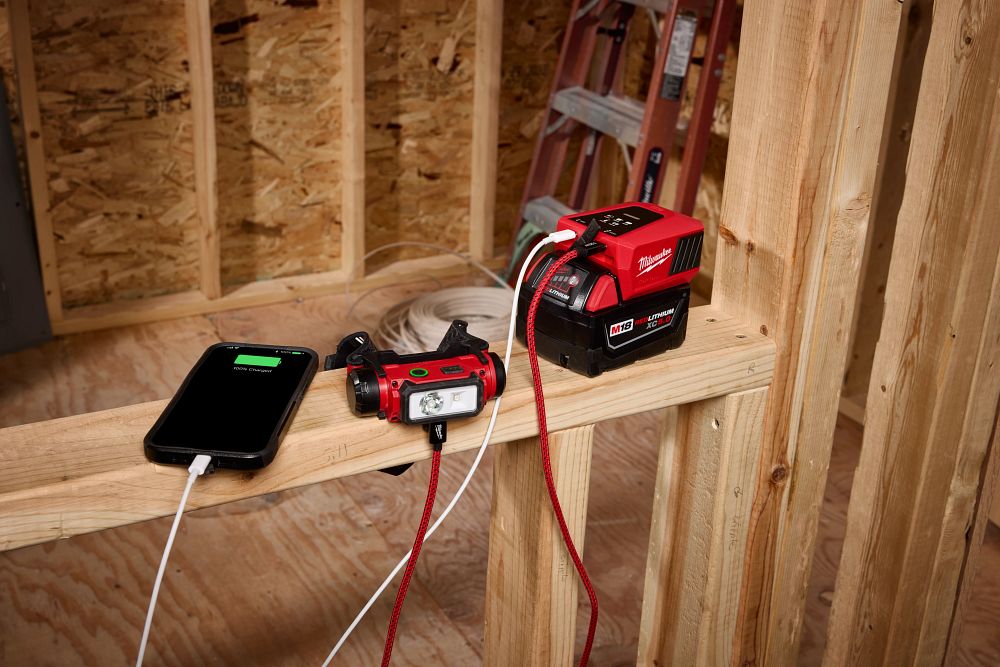
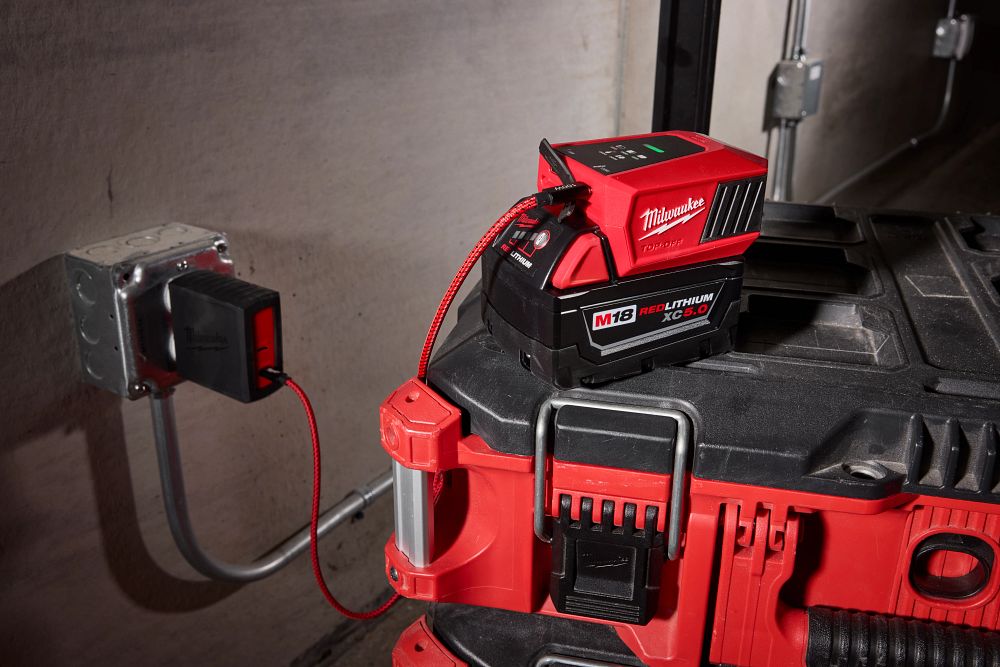
More broadly, Milwaukee’s TOP-OFF lineup reflects how the jobsite is evolving: portable power isn’t just about tools anymore, it’s about the technology that supports the work. As USB-C continues to grow into higher-output standards, options like the 2847 will become even more relevant, while AC power will still keep the 2846 valuable for certain devices. At the end of the day, the right TOP-OFF isn’t the one with the flashiest specs, it’s the one that fits your workflow. Don’t hesitate to reach out at cs@ohiopowertool.com or 614-481-2111 with any questions, comments, or concerns, and be sure to follow us on all your favorite social media channels to stay in the know on all the latest announcements, deals, news, and more!

