

|
Getting your Trinity Audio player ready...
|
Counterfeit power tools have gotten surprisingly good at one thing: looking like the real thing.
Unfortunately, looking like a professional power tool and performing like one are two completely different things.
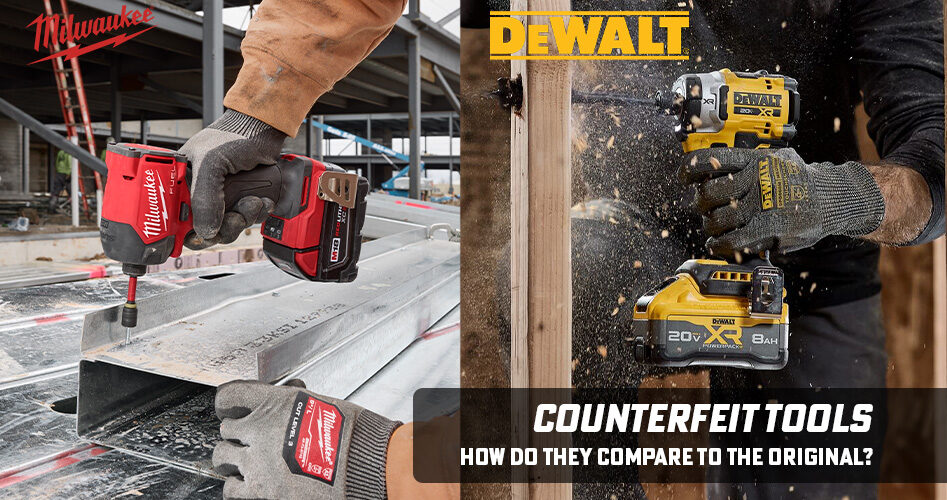
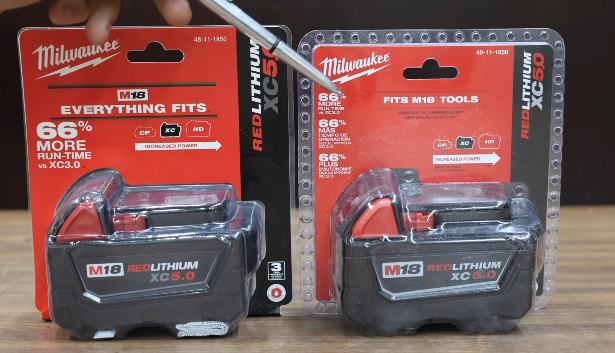
Project Farm recently put genuine and counterfeit Milwaukee, DEWALT, and Makita impact tools head to head, testing everything from no-load speed and driving five-inch screws to installing lag bolts and measuring maximum torque. It followed another recent Project Farm test comparing genuine, counterfeit, and knockoff Milwaukee, DEWALT, and Makita batteries. Both are worth watching if you use cordless power tools professionally or are shopping online for what looks like a great deal.
Counterfeit Tools Can Look Convincing. Performance Is Another Story.
As a tool distributor, we can tell you counterfeit tools are bad all day long, but we also understand why some people might take that with a grain of salt.
If a retailer performs a comparison between an authentic tool it sells and a counterfeit version, someone is inevitably going to question whether the testing favors the genuine product.
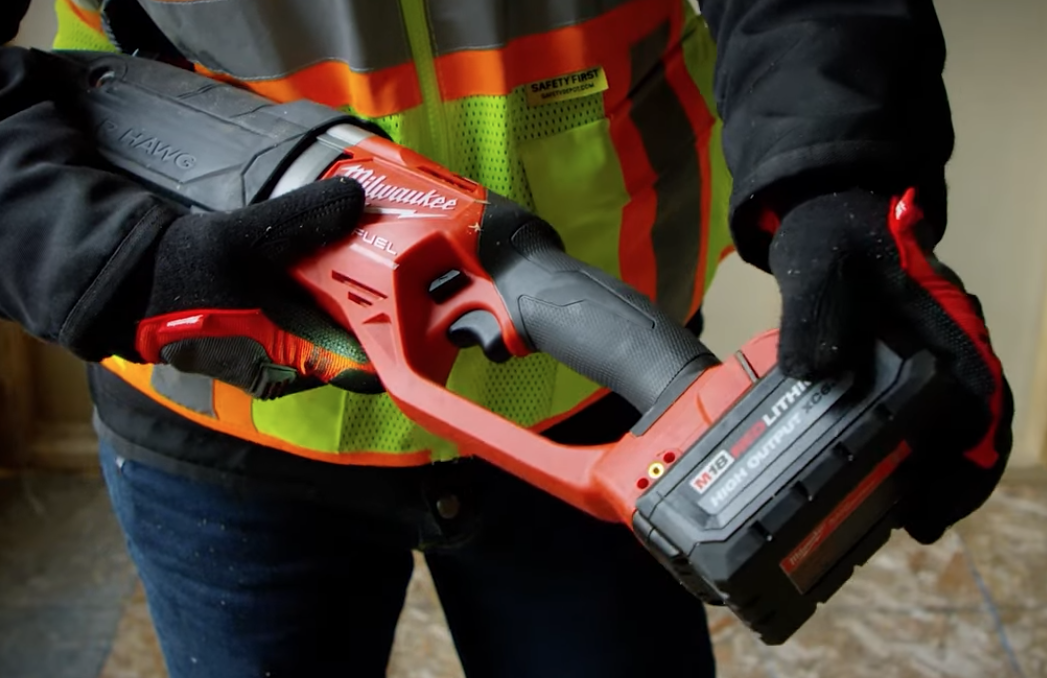
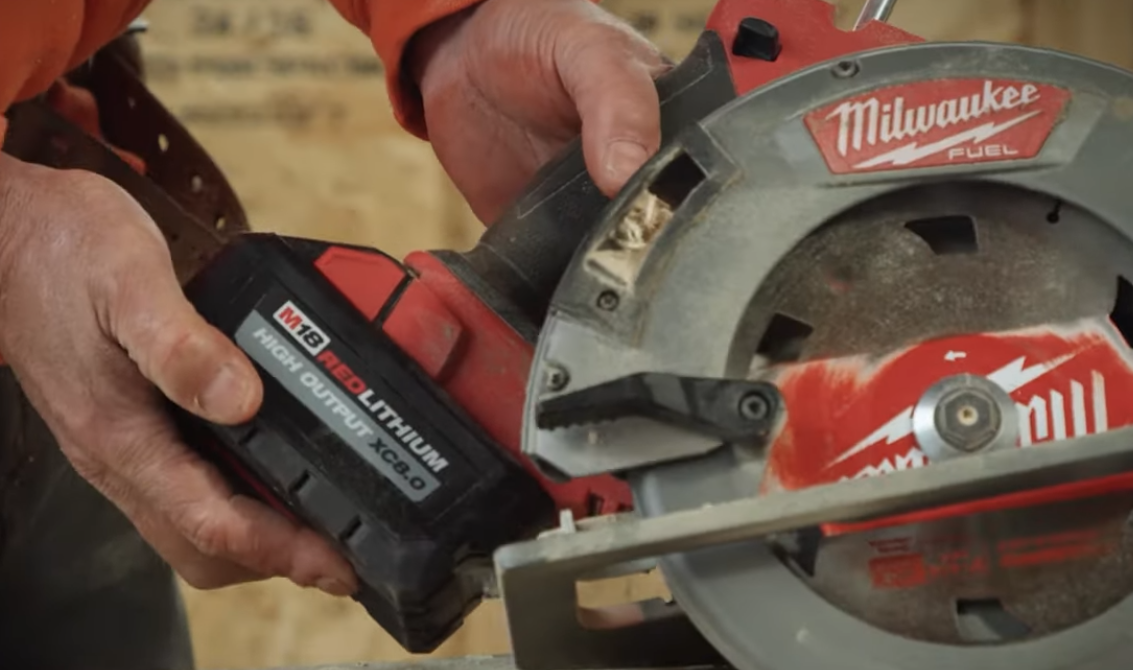
That is part of what makes independent testing like Project Farm’s so useful. The channel purchased the impact tools used in its testing and compared them across the same applications, including driving 5″ screws, installing and removing lag bolts, and measuring maximum torque.
And the results reinforce something we’ve seen over years of working with professional tools: looking the part doesn’t mean a tool can do the job.
When the workload gets harder, the difference between a genuine professional power tool and something designed primarily to imitate one becomes much easier to see.
The Real Cost of a Cheap Counterfeit Tool
This is where the conversation gets more interesting. When somebody sees what appears to be a Milwaukee, DEWALT, or Makita tool online for a fraction of the normal price, it’s easy to think:
“Even if it isn’t quite as good, how bad could it really be?”, but that’s the wrong way to think about a professional power tool.
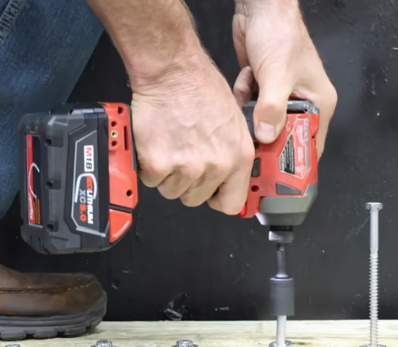
A tool isn’t valuable because of the logo printed on the side. It’s valuable because of what happens when you pull the trigger.
Does it have the power to complete the application? Does it complete that application efficiently? Can you rely on it day after day? Are the tool, battery, and charger designed to work together correctly? And if something goes wrong, is there actually a manufacturer standing behind the product?
Those questions matter a lot more than whether the red plastic looks close enough to Milwaukee red.
Power Tools Aren’t Fashion Accessories
There’s another reason counterfeit power tools don’t make much sense, especially for professionals.
Think about why people buy counterfeit luxury products. A fake watch might still tell time. Counterfeit sneakers still go on your feet. A knockoff designer bag can still carry your stuff.
In those cases, part of what the buyer is purchasing is the look.
Professional power tools are different.
Nobody on a jobsite benefits because their impact driver looks powerful. It has to actually drive the fastener.
A tradesperson isn’t buying an impact driver, hammer drill, grinder, circular saw, or reciprocating saw just to own it. That tool is there to perform a job, and usually the faster and more reliably it performs that job, the more valuable it becomes.
For professionals, time is money.
Saving money upfront starts looking a lot less impressive if the tool takes significantly longer to complete demanding applications, struggles under load, dies early, or leaves you replacing it sooner than expected.
That’s why purchase price and actual value aren’t always the same thing.
Who Is Actually Buying Counterfeit Power Tools?
This might be the most important question.
Some buyers almost certainly don’t know they’re purchasing a counterfeit.
Imagine someone shopping for a gift for a family member starting trade school. They know the person likes Milwaukee, DEWALT, or Makita, but they have no idea what an authentic impact driver normally costs.
They search online, find something that looks right, see a familiar logo and a surprisingly low price, and order it.
To an experienced tool user, a price that seems way too good to be true might immediately raise a red flag. To somebody who has never purchased professional tools before, it may simply look like a great deal.
That’s what makes counterfeit products particularly frustrating. The closer they look to authentic products, the easier it becomes for an inexperienced buyer to make a very expensive “cheap” purchase.
What If You Know It’s Counterfeit and Buy It Anyway?
This is harder to understand because there are already legitimate lower-cost power tool options.
You don’t have to buy a flagship professional cordless tool to get something functional.
TTI’s portfolio, for example, includes both Milwaukee and RYOBI, but the brands are positioned for different users. TTI describes Milwaukee as part of its professional tool portfolio while positioning RYOBI primarily for the DIY market.
That distinction matters.
A legitimate lower-cost tool doesn’t have to pretend it’s something else. It can be engineered around a different price point and user.
The same idea applies within major professional brands. If you don’t need the highest-performing brushless or premium model, there may be a more affordable genuine tool that still gives you the manufacturer support and ecosystem compatibility you’re expecting.
So if you’re willing to accept less performance to save money, why buy a tool pretending to be something it isn’t?
Counterfeit Batteries Add Another Level of Risk
Counterfeit cordless batteries deserve special attention because performance isn’t the only concern.
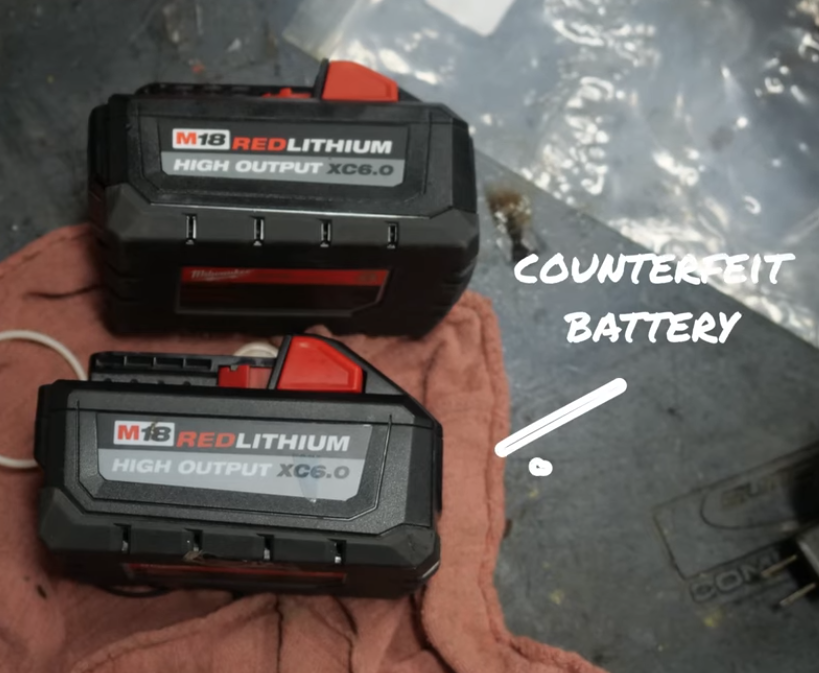
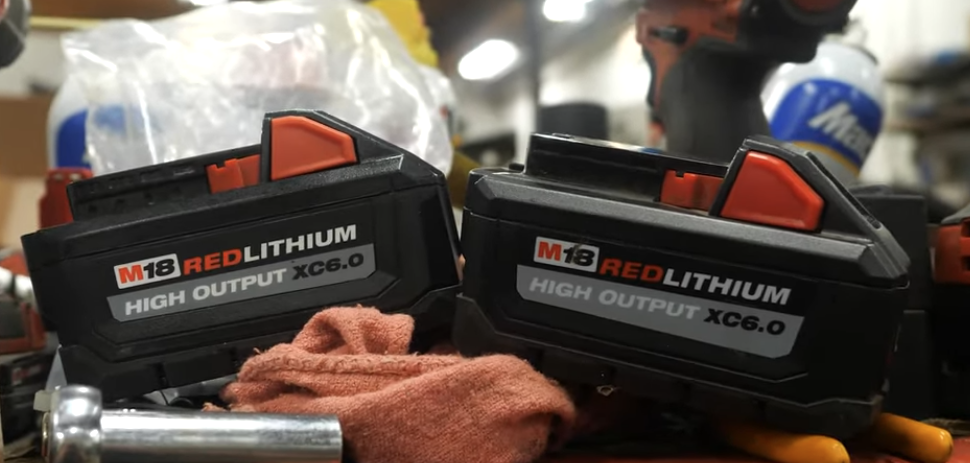
Project Farm’s recent battery comparison looked at genuine, counterfeit, and knockoff Milwaukee, DEWALT, and Makita batteries, comparing capacity and tool performance and also examining safety and internal construction.
Manufacturers have also issued their own warnings.
Makita specifically warns against using non-genuine lithium-ion batteries, stating that they can interfere with electronic communication between the battery, charger, and tool. Makita identifies possible consequences including unknown tool performance, fire damage, and batteries bursting and causing personal injury or property damage.
That doesn’t mean every third-party battery is automatically going to fail catastrophically. It does mean that buying a battery of unknown origin based primarily on its appearance and price can introduce variables you probably don’t want attached to a high-current power tool.
Warranty and Authorized Sellers Matter Too
Performance isn’t the only thing you’re paying for when you buy a genuine tool from a legitimate source.
You’re also buying into the manufacturer’s support system.
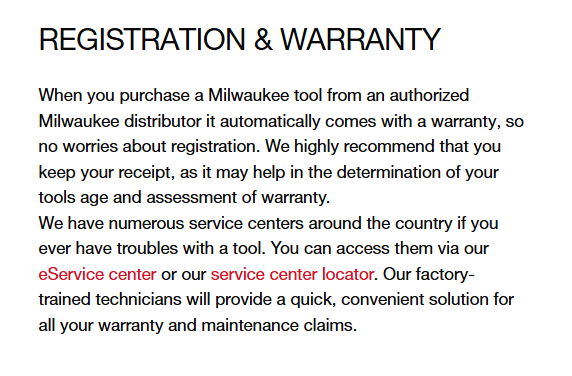
DEWALT, for example, states that because it cannot control the quality of products sold by unauthorized sellers, its applicable warranties and service programs generally apply to products purchased from DEWALT or an authorized seller, subject to applicable law. DEWALT specifically advises customers who aren’t sure whether a seller is authorized to contact the company.
With a counterfeit product, the logo might look familiar, but that doesn’t make the company whose name was copied responsible for the product.
That distinction becomes pretty important the first time something goes wrong.
How to Avoid Counterfeit Power Tools and Batteries
The easiest way to reduce your chances of getting burned is to pay attention to where the tool is coming from, not just what the listing looks like.
Be cautious when the price is dramatically lower than normal, especially on current professional tools and batteries. Look carefully at model numbers, packaging, labels, spelling, battery markings, included accessories, and seller information. More importantly, verify that you’re purchasing from a legitimate retailer or authorized source when manufacturer warranty coverage matters to you.
And remember: being sold through a familiar online marketplace doesn’t necessarily mean the individual seller behind the listing is the tool manufacturer or one of its authorized dealers.
If the deal looks suspiciously good, spend a few minutes verifying it before spending your money.
Looks or Performance? For Power Tools, That Should Be an Easy Choice.
At the end of the day, a power tool isn’t supposed to sit on a shelf and look expensive.
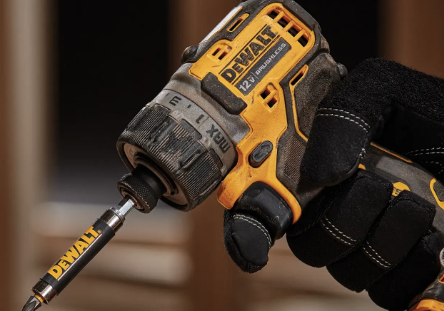
Professional users buy tools because they need performance, productivity, reliability, and equipment they can depend on when there’s work to get done.
A counterfeit might copy the housing. It might copy the colors. It might copy the logo closely enough to fool somebody scrolling through product listings.
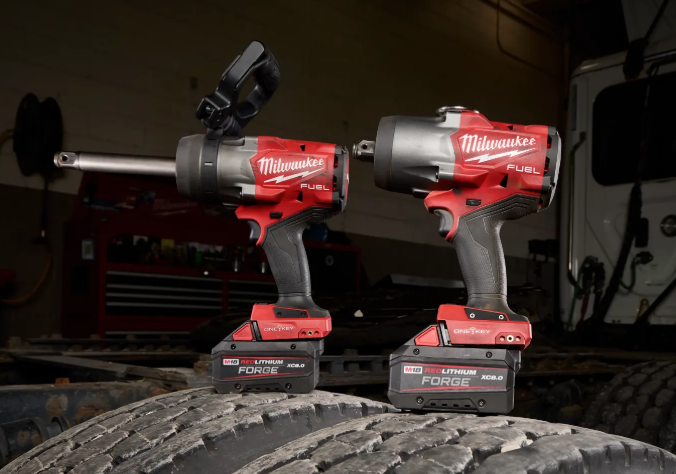
What it can’t simply copy is everything behind that logo: engineering, testing, electronics, manufacturing standards, battery management, service networks, warranties, and years of product development.
If a genuine flagship professional tool isn’t in your budget, that’s completely understandable. Look at a less expensive model from the same manufacturer or another legitimate brand designed around your needs and budget.
Because when you’re actually trying to get work done, having a tool that looks like the real thing doesn’t save you anything.
Having one that performs does.
Buy the Tool for the Job, Not Just the Look
At the end of the day, a power tool is supposed to make your job easier, faster, and more productive, and that’s where counterfeit tools simply don’t make sense. Saving money upfront might sound appealing, but if the tool struggles when the work gets tough, takes significantly longer to finish the same task, or leaves you questioning how long it will last, what are you really saving? You don’t always need the most expensive or highest-performing tool on the market either. There are plenty of legitimate options at different price points that are actually designed, tested, and supported for the work they’re meant to do. So before buying a tool because it looks like the Milwaukee, DEWALT, or Makita you wanted at a price that seems too good to pass up, remember what actually matters on the jobsite: not what the tool looks like, but what it can do when you pull the trigger. Don’t hesitate to reach out at cs@ohiopowertool.com or 614-481-2111 with any questions, comments, or concerns, and be sure to follow us on all your favorite social media channels to stay in the know on all the latest announcements, deals, news, and more!
