

|
Getting your Trinity Audio player ready...
|
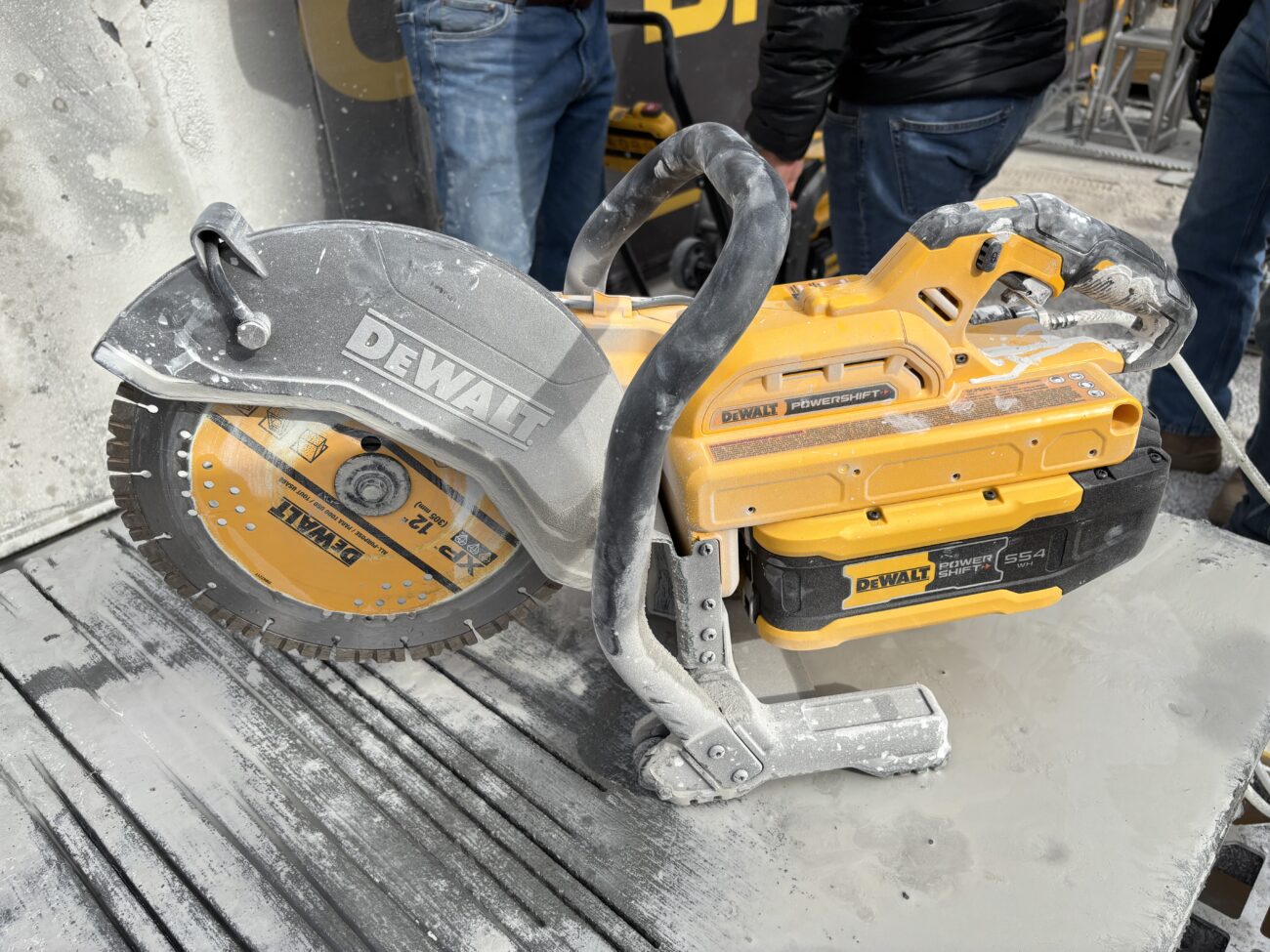
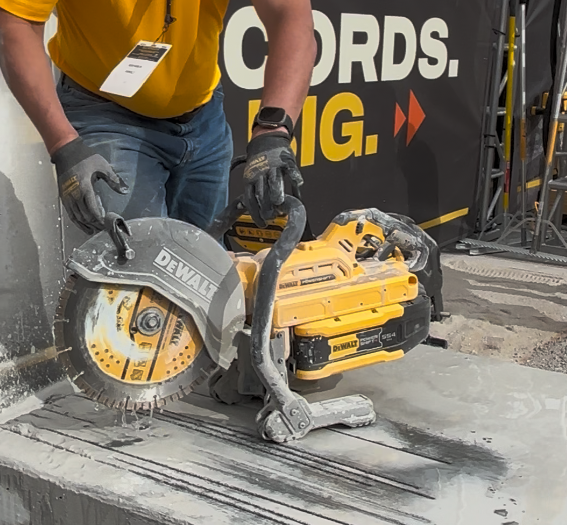
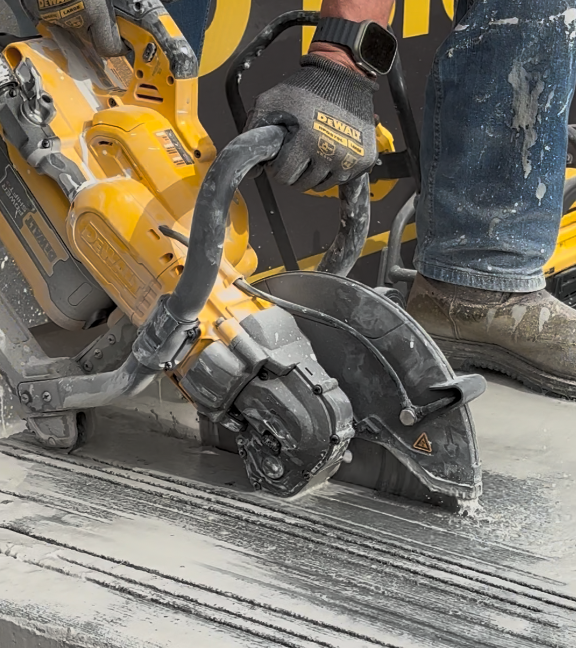
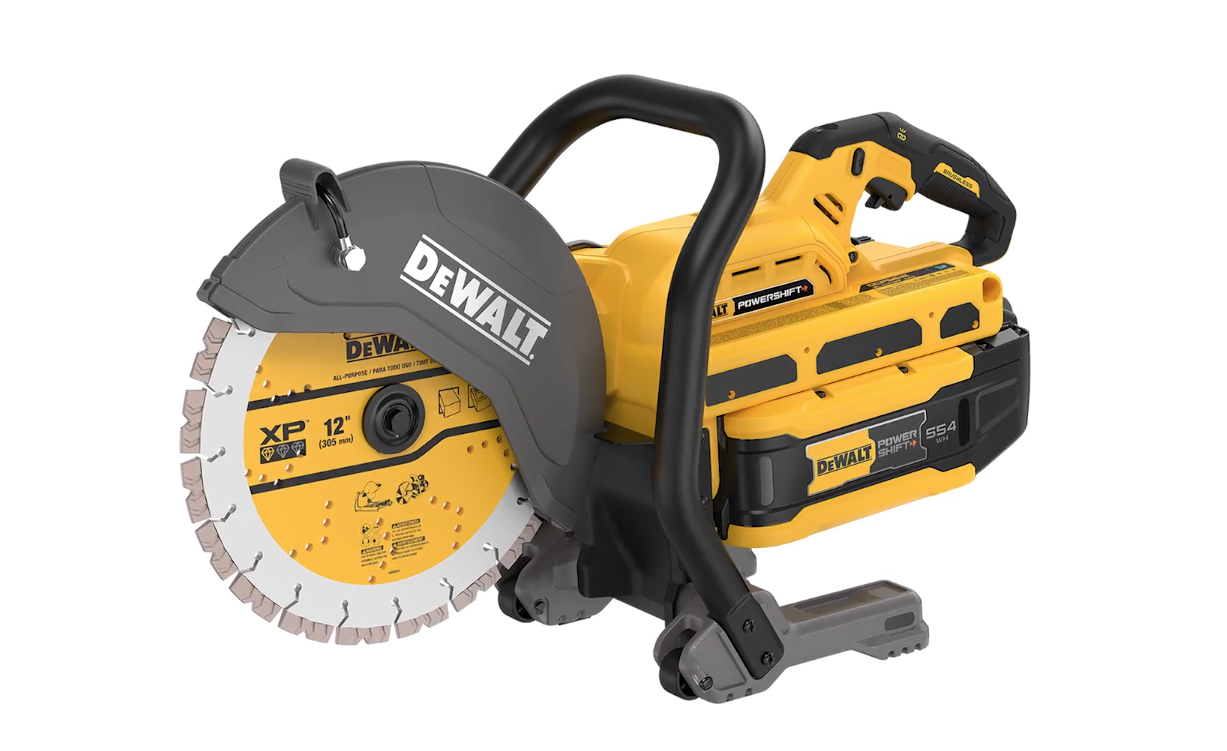
Fresh off the floor at the World of Concrete 2026 show in Las Vegas, one tool had contractors crowding the Silver Lot demo area, the new DeWalt Powershift 12-inch Cut-Off Saw (DCPS612). At first glance, the biggest question was obvious:
Why did DeWalt go with a 12-inch blade instead of 14-inch like the competition?
On paper, it sounds like a step backward. But after seeing this saw run live, the engineering story becomes a lot more interesting. Let’s break down the physics, the gear-drive advantage, and how it stacks up against the cordless heavyweight, the Milwaukee MX FUEL (MXF315).
Why Smaller Can Mean More Power
When it comes to battery-powered concrete saws, the number one enemy is stalling under load.
Anyone who cuts cured concrete knows the scenario:
You bury a large blade deep into the slab, hit rebar, and the saw bogs down. This happens because a larger blade creates more rotational resistance, the blade radius essentially acts like a longer lever working against the motor.
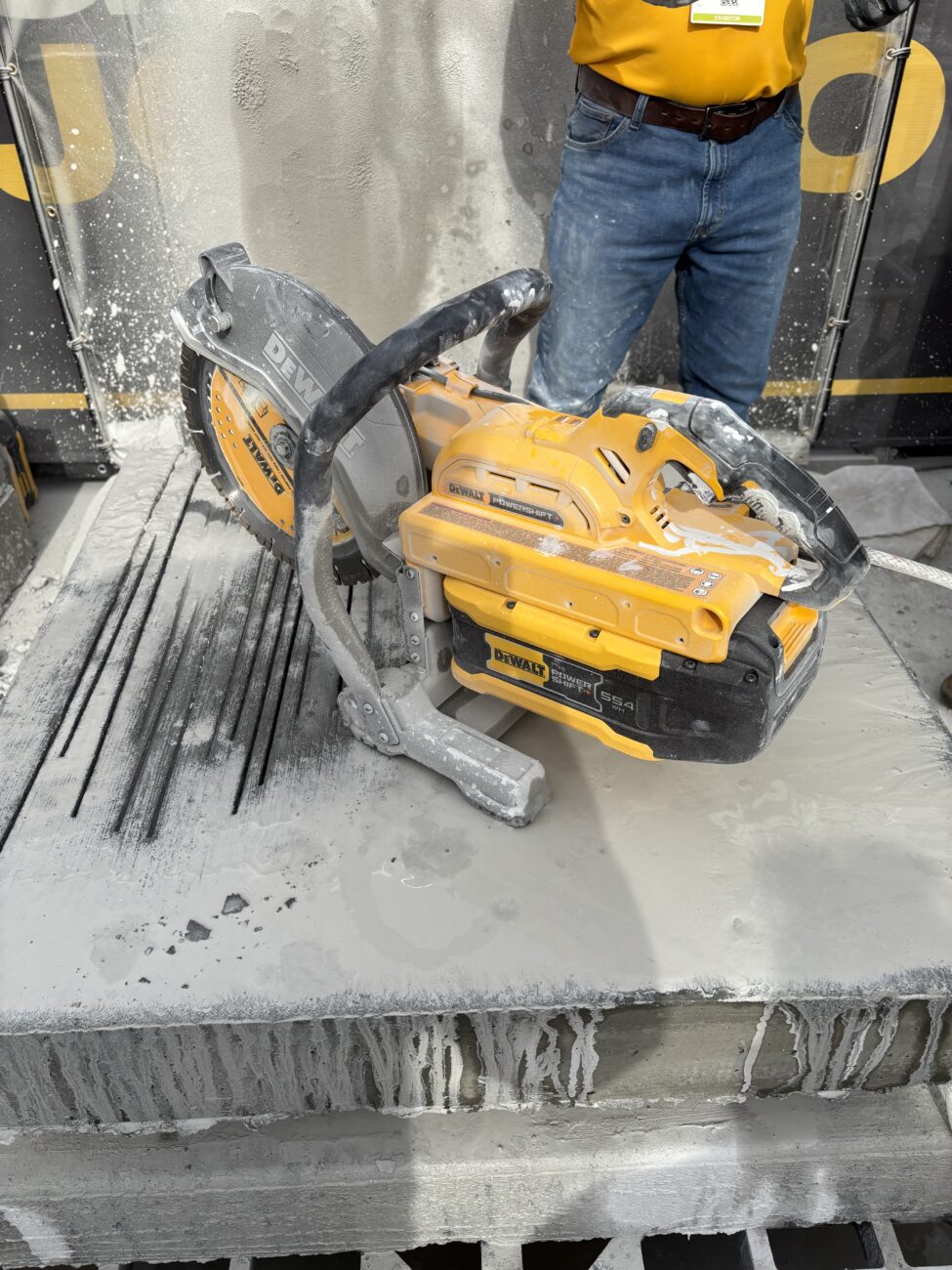
The Mechanical Advantage:
By stepping down to a 12-inch blade, DeWalt gains a real physics advantage:
-Less rotating mass.
-Shorter lever arm against the motor.
-More torque delivered at the cut.
-Reduced likelihood of stalling.
In real-world terms, the saw doesn’t feel like it’s carefully managing power—it feels like it’s dumping power into the cut.
DeWalt is claiming this is the most powerful cordless cut-off saw they’ve produced and based on the live demos chewing through #5 rebar, that claim has some teeth.
The Secret Sauce: Gear Drive vs Belt Drive
Here’s where things get interesting.
Most traditional cut-off saws gas and cordless, use a belt-drive system. Belts and pulleys require extra space in the powertrain, which pushes the motor housing farther away from the blade. That design eats into your maximum cutting depth.
DeWalt went a different direction.
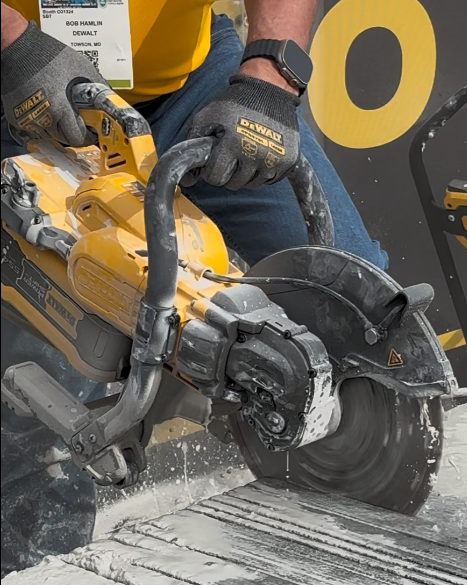
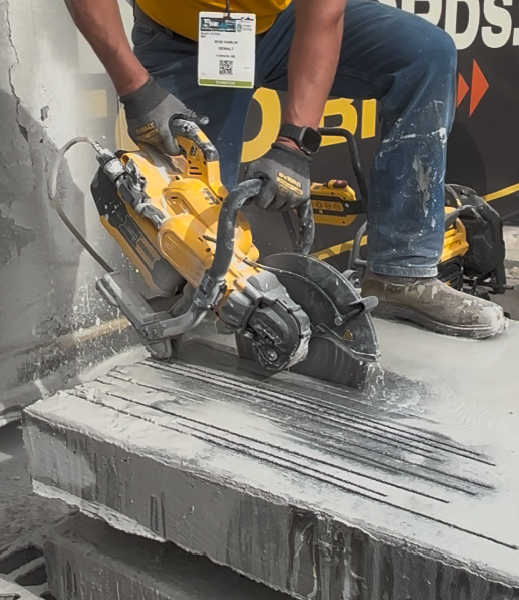
What the Gear-Driven Design Changes:
The gear-driven transmission allows:
-More compact power transfer
-Tighter motor-to-blade packaging
-Increased usable cutting depth
-Improved durability (no belts to wear)
The result:
The DCPS612 delivers a 4-3/4 inch max depth of cut.
12-Inch vs 14-Inch: Real Numbers Comparison
When you look at the DeWalt DCPS612, the numbers tell a very intentional story. This saw runs a 12-inch blade and uses a compact gear-drive system to deliver a 4-3/4-inch max depth of cut on the Powershift platform. On paper, yes, you’re giving up about 1/4 inch compared to the larger class. But what DeWalt is clearly chasing here is performance efficiency. The smaller blade and tighter powertrain help deliver a stronger torque feel at the cut, reduce the chance of stalling when you lean into rebar or cured concrete, and improve overall battery efficiency. For many contractors, especially those focused on flatwork, masonry, or indoor cutting, that trade-off could make the saw feel more responsive and easier to manage throughout the day.
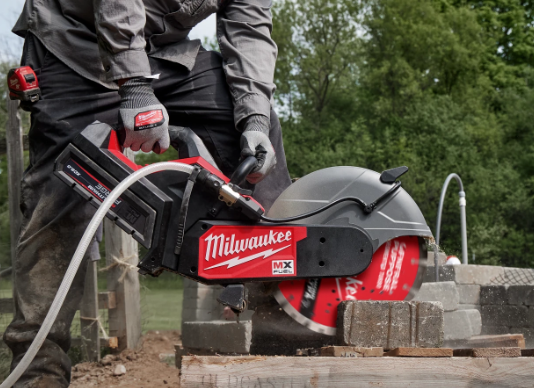
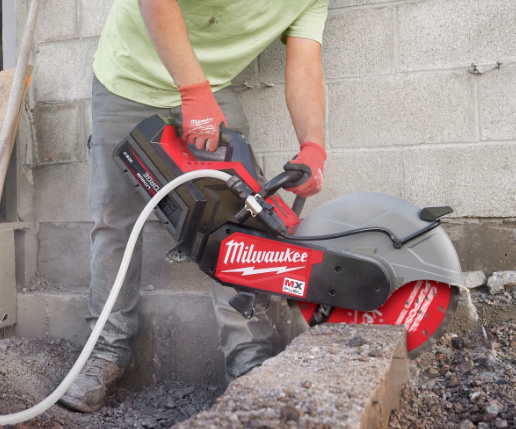
On the other side, the Milwaukee MX FUEL MXF315 (MXF315-0) continues to hold its ground as the established cordless benchmark. With its 14-inch blade, belt-drive system, and full MX FUEL platform backing it, the MXF315 delivers a full 5 inches of cutting depth and has already proven itself on demanding jobsites. That extra capacity still matters for crews regularly pushing deep cuts. And to be clear, this isn’t a simple case of smaller versus better, we’ve seen the MX FUEL system perform extremely well over time. What DeWalt has done is introduce a different engineering strategy, and the real decision for contractors will come down to whether that last quarter inch of depth outweighs the potential gains in torque, efficiency, and handling.
Jobsite Features That Actually Matter
Beyond raw power, a few practical features stood out during the demo.
Integrated Base Wheels
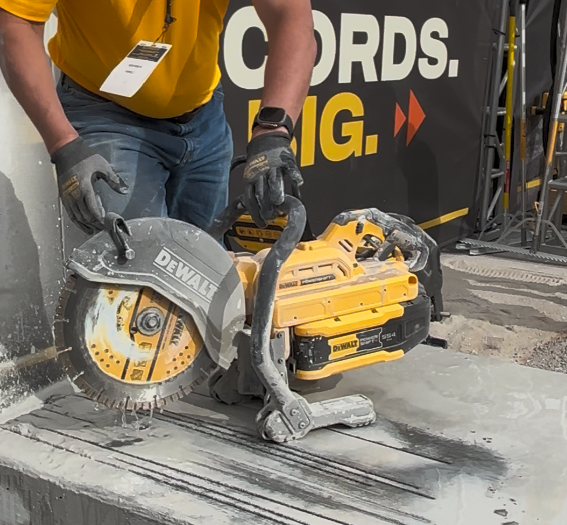
This might sound minor, but it’s a big deal for flatwork crews. The built-in wheels allow the saw to glide during long scoring cuts, which:
-Improves control on slabs
-Reduces operator fatigue
-Helps maintain straighter cuts
Electric Brake Safety
Safety is another major upgrade over gas saws, when the trigger is released, the electric brake stops the blade in under 3 seconds. Anyone who has dealt with blade bind or kickback knows that faster stopping can make a real difference on the jobsite.
Who This Saw Is Really For
Based on what we saw at World of Concrete, the Powershift cut-off saw makes the most sense for:

-Flatwork contractors
-Masonry crews
-General demolition
-Indoor cutting applications
-Crews transitioning away from gas
If your workflow absolutely requires that last quarter inch of depth every day, the 14-inch class may still have the edge. But for many users, the torque and efficiency benefits could outweigh the slight depth difference.
At the end of the day, DeWalt didn’t shrink the blade to cut corners, they did it to get more performance out of every watt. By pairing a 12-inch blade with a compact gear-driven system, they’re aiming to deliver about 95% of the cut capacity while potentially improving real-world torque, efficiency, and stall resistance where cordless saws typically struggle most. It’s a calculated engineering move, not a compromise.
With the DCPS612 expected to land in November 2026, the cordless concrete cutting space just got a lot more competitive. Don’t hesitate to reach out at cs@ohiopowertool.com or 614-481-2111 with any questions, comments, or concerns, and be sure to follow us on all your favorite social media channels to stay in the know on all the latest announcements, deals, news, and more!

