

|
Getting your Trinity Audio player ready...
|
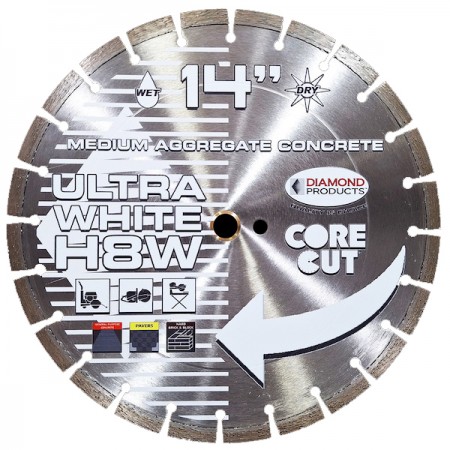
Choosing the right diamond blade takes more than matching the diameter. The blade also needs to match the material, the aggregate, the saw horsepower, and whether you are cutting wet or dry. This is especially important with concrete because two slabs that look similar can cut very differently depending on the aggregate inside them.
If you remember only one rule, make it this one:
Use a hard bond to cut a soft material, and use a soft bond to cut a hard material.
It may sound backward at first, but understanding how the bond and diamonds work together makes it much easier to choose the right blade for the material you are cutting.
How Does a Diamond Blade Work?
A diamond blade does not cut like a traditional toothed saw blade. Its segments contain synthetic diamonds held inside a metal bond. As the blade moves through the material, the exposed diamonds grind away the surface. At the same time, the bond gradually wears down and exposes fresh diamonds.
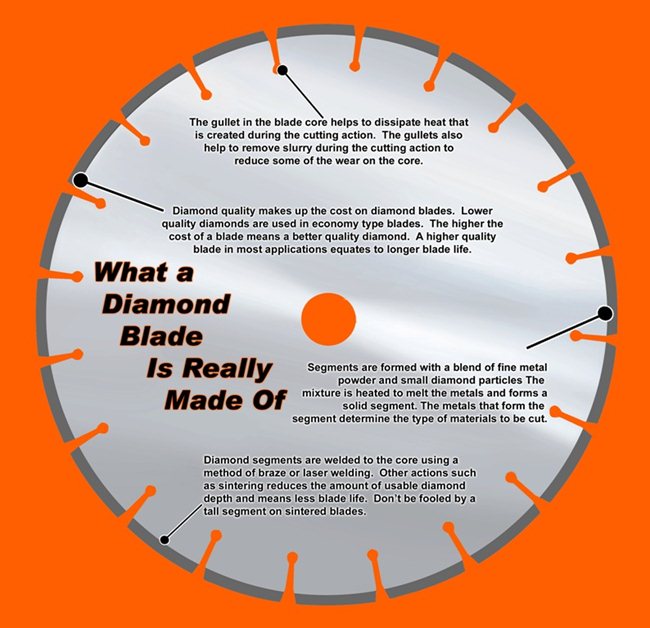
The goal is controlled wear. If the bond is too hard for the material, it may not release worn diamonds quickly enough. The blade can glaze over, slow down, and stop cutting efficiently. If the bond is too soft, the segments can wear away too quickly and shorten blade life.
Diamond quality also plays a big role in how a blade performs:
Lower-quality synthetic diamonds are typically used in more economical blades and can be a practical choice for occasional or lighter-duty cuts. Medium-quality diamonds offer a better balance of cutting speed, blade life, and price for regular professional use. High-quality diamonds are built for demanding production work where faster, more consistent cutting and longer blade life can make the higher upfront cost worthwhile.
The most expensive blade is not automatically the best choice for every cut. The best value comes from matching the blade quality and bond to the workload.
The Difference Between Cured Concrete, Green Concrete, and Asphalt
Before comparing blade families, identify the material you are cutting.
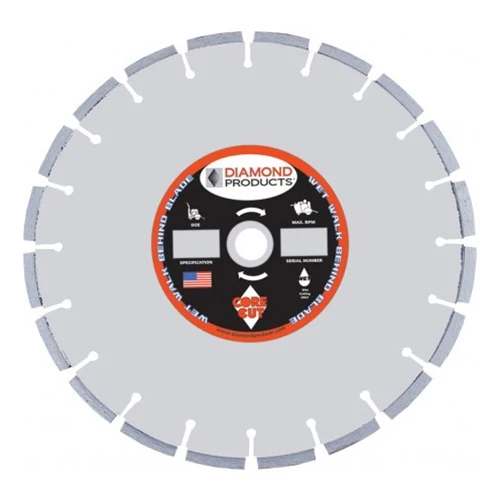
Cured concrete has already hardened, so choosing the right blade usually depends on the type and hardness of the aggregate in the slab. Reinforcement also matters because cutting through steel can create more heat and resistance, which can affect blade performance and life.
Green concrete is newer concrete that has not fully cured, which makes it softer and more abrasive than cured concrete. Because of that, it typically needs a harder bond that can better resist rapid segment wear during cutting.
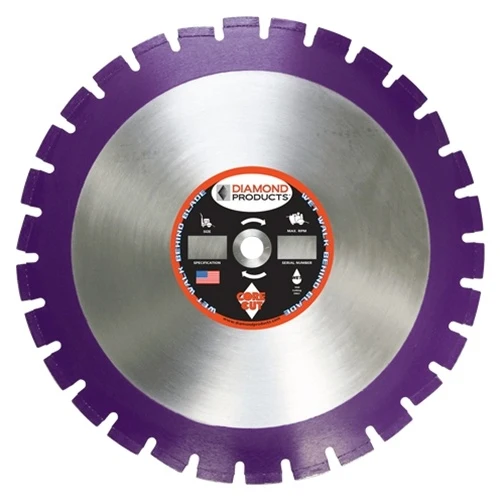
Asphalt is a soft and highly abrasive material, so it typically requires a harder bond that can stand up to faster wear. Many asphalt blades also use undercut protection to help protect the steel core from abrasive slurry during cutting.
Do not choose a cured-concrete blade for asphalt just because you are using the same walk-behind saw. The blade bond should always be matched to the material being cut.
When to Use Each Diamond Products Blade
Diamond Products offers several wet walk-behind blade options designed for different materials and cutting conditions. When choosing the right blade, make sure the specific SKU matches the aggregate, reinforcement, saw horsepower, blade diameter, arbor, and whether the application is wet or dry.
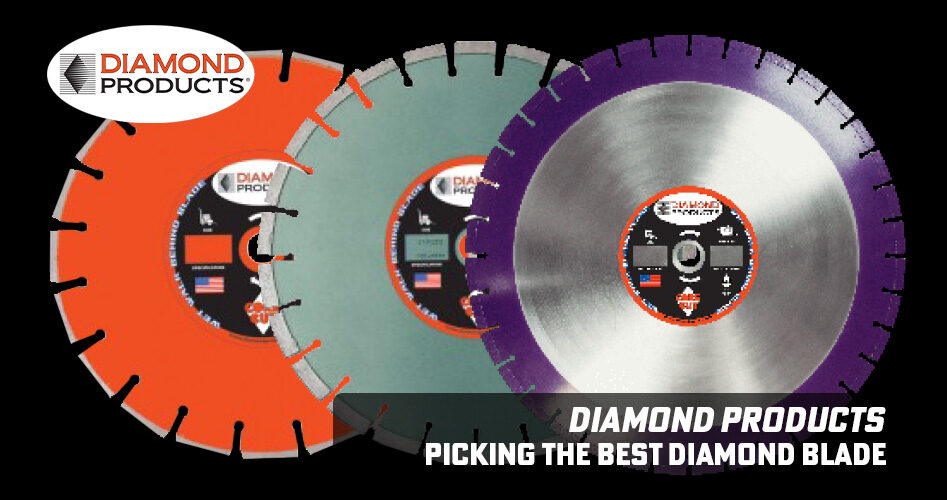
Imperial Purple Wet Cured Concrete
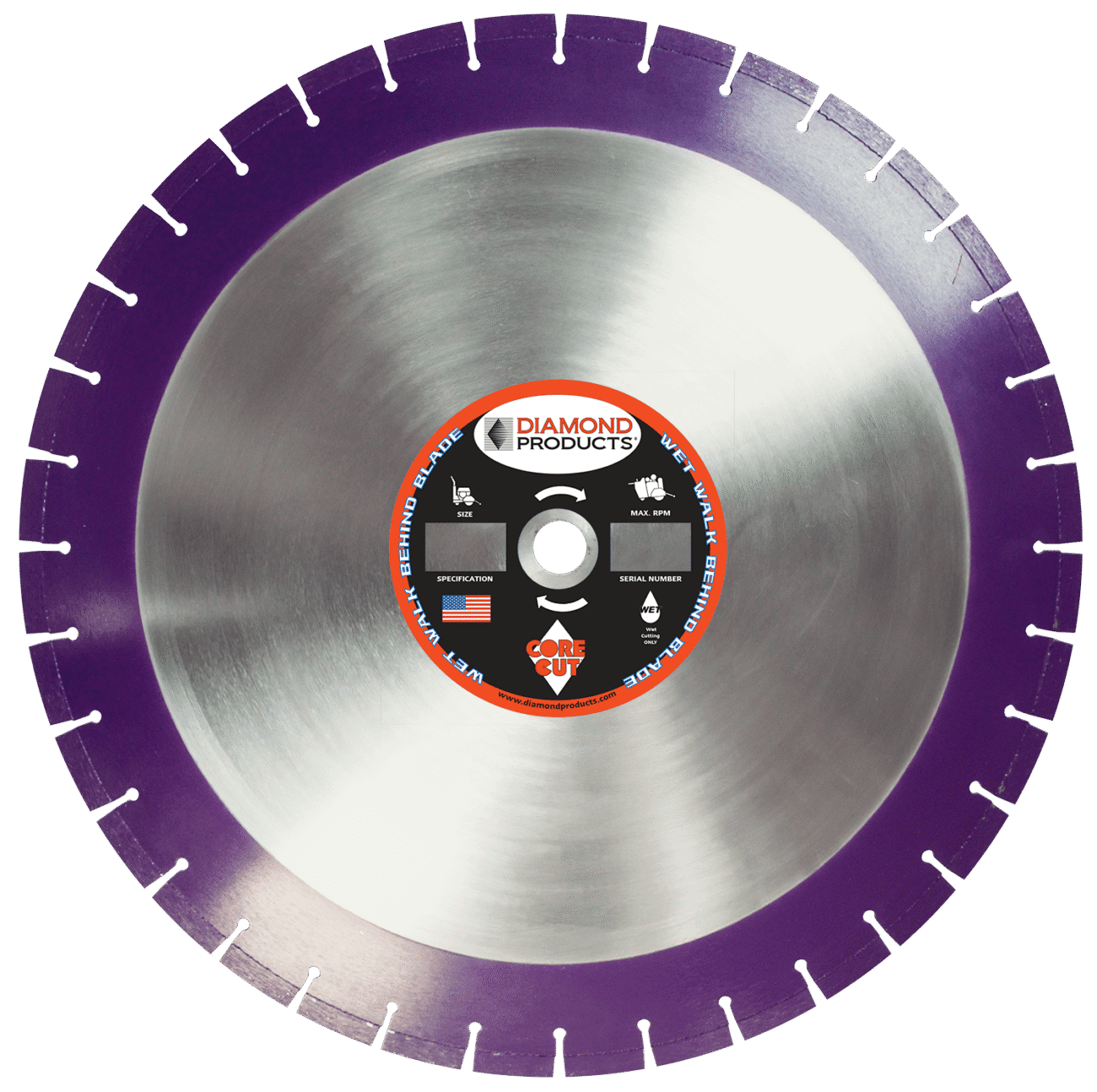
Use Imperial Purple Wet Cured Concrete when you need an economical wet-cutting blade for cured concrete. Using basic-quality diamond and providing economical cutting value. It is a practical starting point for occasional cutting, smaller jobs, or crews focused on initial blade cost. Select the correct cured-concrete specification for the aggregate and saw.
Imperial Purple Asphalt/Green Concrete
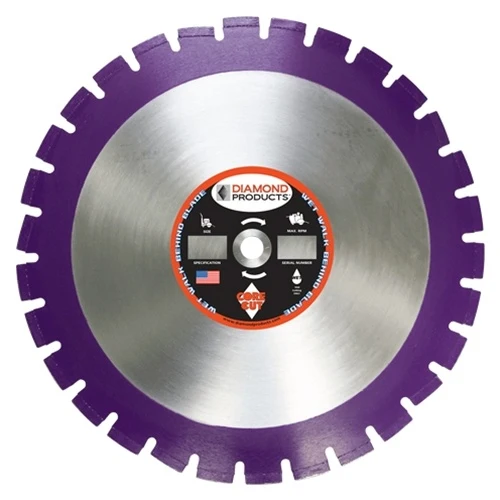
Use Imperial Purple Asphalt/Green Concrete for abrasive materials such as asphalt or green concrete. Its harder-bond direction follows Diamond Products’ rule to use a hard bond on soft material. There are Imperial Purple options for asphalt, green concrete, and asphalt over concrete.
Heavy Duty Orange
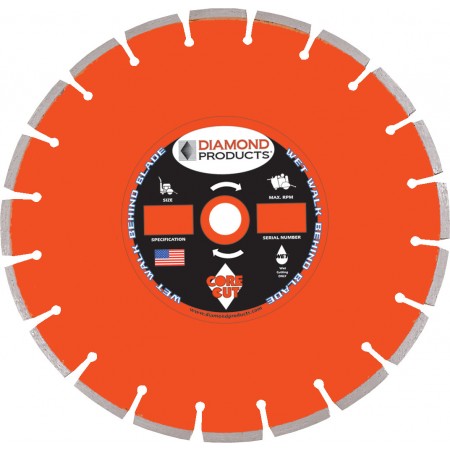
Use Heavy Duty Orange when cutting speed and versatility are more important than choosing the lowest-cost option. It is a fast-cutting blade that works with a wide variety of high- and low-horsepower saws in the official.
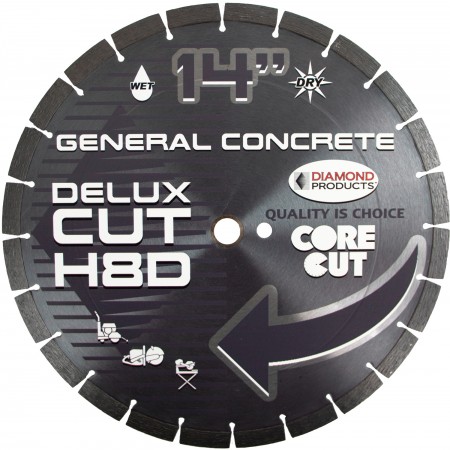
Premium Black
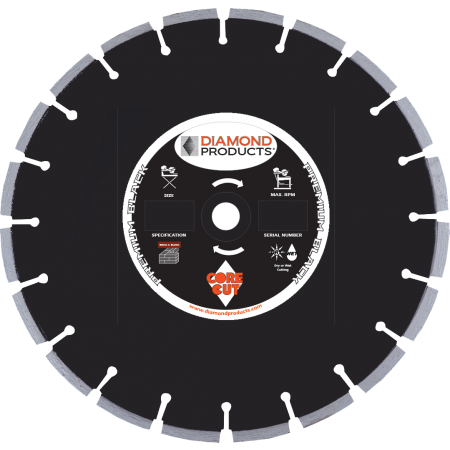
Diamond Products lists Premium Black as a professional wet walk-behind blade option for cured concrete. When choosing the right blade, make sure the specific SKU matches the aggregate, reinforcement, saw horsepower, blade diameter, and arbor requirements of the job.
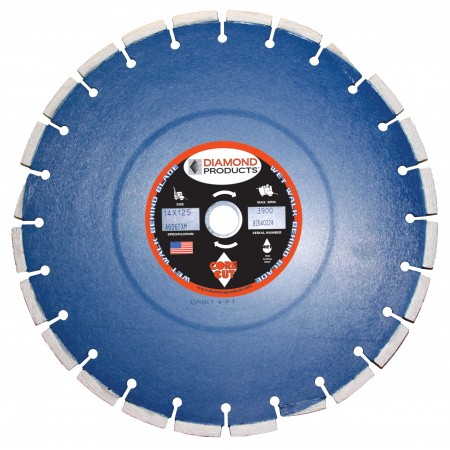
Pro Blue
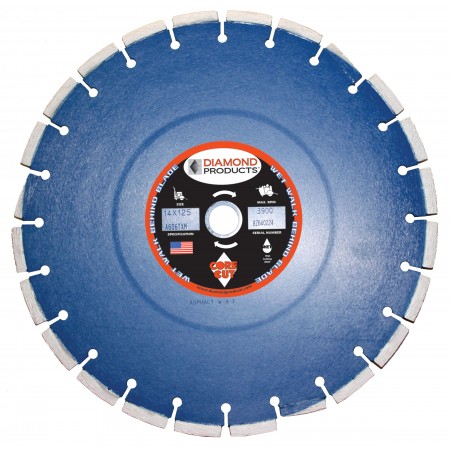
Pro Blue blades are a professional wet walk-behind option for cured concrete. When choosing the right blade, make sure the specific SKU matches the aggregate hardness, reinforcement, saw horsepower, blade diameter, and arbor requirements of the job, and always check the exact product specifications for expected cutting speed and blade life.
Super Premium Silver
Super Premium Silver blades are a professional wet walk-behind option for cured concrete and demanding cutting applications. When choosing the right blade, make sure the bond matches the aggregate, since the wrong bond can cause glazing or premature wear, and always check the exact segment and application specifications for the job.
Mega Premium Green
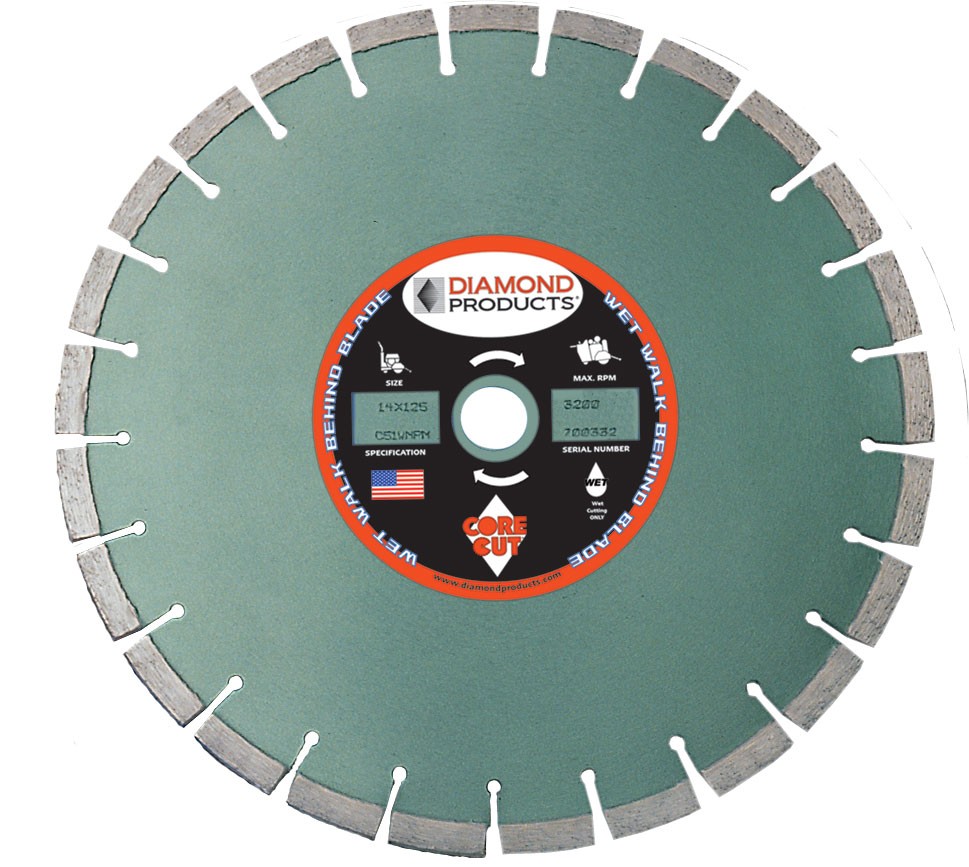
Mega Premium Green blades are a professional wet walk-behind option for cured concrete and demanding cutting applications. When choosing the right blade, make sure the specific SKU matches the aggregate, reinforcement, saw horsepower, blade diameter, and arbor requirements of the job, and always check the exact product specifications for expected blade life and performance.
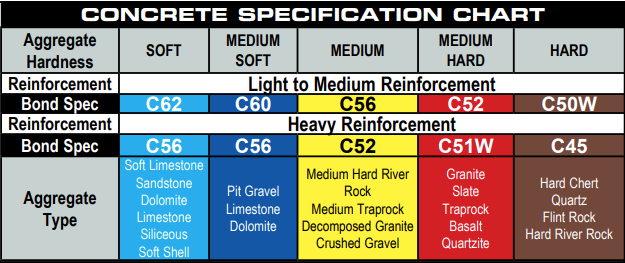
How Aggregate Hardness Changes Your Blade Choice
Aggregate is the stone inside concrete, and it can have a major effect on blade performance.

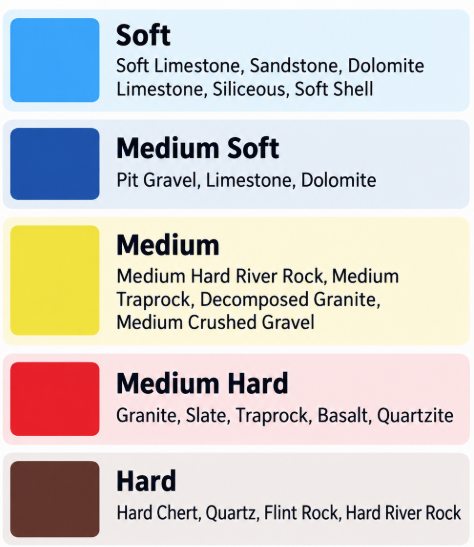
The aggregate map is a useful starting point, but it should not be treated as a guarantee since different aggregate types can be found throughout the United States and Canada. If the aggregate is unknown, start with a middle-range blade specification and adjust based on how the blade performs during the cut.
Watch the blade as you work. If it starts glazing and stops cutting effectively, the bond may be too hard for the material, so a softer bond may be needed. If the blade cuts freely but loses segment height too quickly, the bond may be too soft.
What Do X, R, and Q Mean on a Diamond Blade?
Some Diamond Products blades use letter codes to identify different types of undercut protection. Because these markings can vary by blade series, always check the current Diamond Products catalog or the exact product specifications before publishing. Undercut protection is especially useful in abrasive applications, where slurry can wear away the steel core just below the segments.
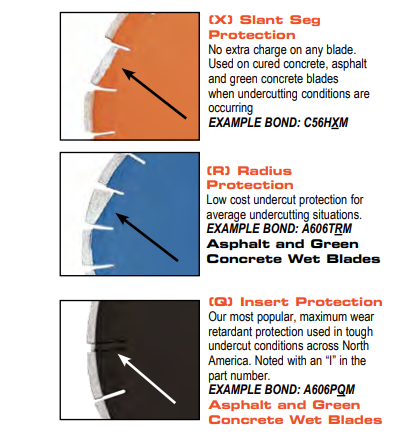
X: Slant segment protection
Angled protective segments help shield the core from undercutting.
R: Radius protection
Protective diamond material follows the outer radius to reduce wear near the segment-to-core area.
Q: Insert protection
Diamond inserts are positioned to help protect vulnerable areas of the core.
Undercut protection helps protect the steel core from abrasive material and slurry, but it does not replace choosing the correct blade. The bond, material rating, and operating conditions still need to match the application.
Operating Speeds and Safety by Blade Type
Blade speed should always match both the blade rating and the saw manufacturer’s specifications. Check the maximum revolutions per minute marked on the blade, and never operate it above that limit. The blade diameter, arbor, drive-pin setup, and guard requirements also need to match the saw before cutting begins.
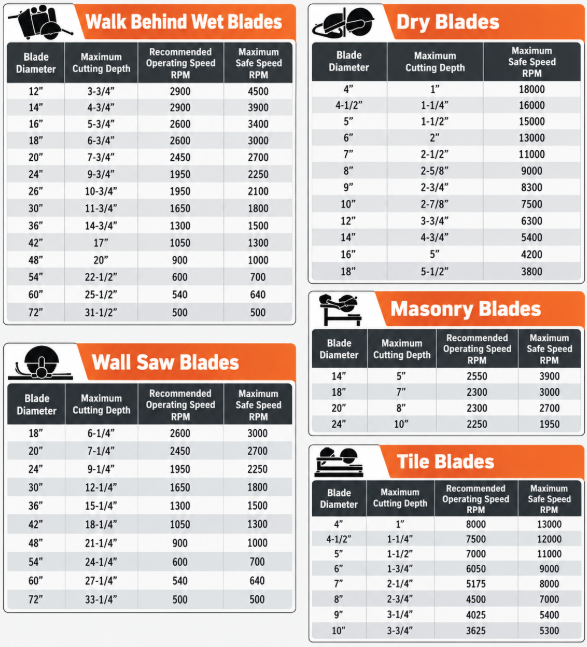
Saw horsepower, shaft speed, and material hardness can all affect blade performance. Higher-horsepower saws may require harder bonds and higher diamond concentration, while lower-horsepower saws may work better with softer bonds and lower diamond concentration. Increasing shaft speed generally makes the blade act harder, while decreasing shaft speed can increase wear. Harder, less abrasive materials typically require slower shaft speeds, while softer, more abrasive materials may require faster shaft speeds. Never operate a blade above its rated maximum RPM, as excessive speed can damage the blade and create a serious safety hazard.
Walk-Behind Wet Blades
Walk-behind wet blades should be used on an approved walk-behind saw with a steady, adequate water supply. Water helps cool the blade, control dust, and carry slurry out of the cut, so make sure it reaches both sides of the blade before you start cutting. Do not force the saw forward; let the blade and saw horsepower determine a natural feed rate.
Wall Saw Blades
Wall saw blades are designed for high-powered, demanding cutting applications, so the blade needs to match the wall saw’s power, drive system, blade capacity, and operating speed. Before cutting, confirm the blade rotation direction, inspect the flange and mounting hardware, and make sure the required water flow is in place. Wall saws should always be set up and operated by trained users following the equipment manual and site safety requirements.
Dry Blades
Dry blades should only be used for dry cutting when they are specifically rated for it. Because dry cutting creates more heat and airborne dust, avoid excessive pressure and long continuous passes unless the manufacturer allows them. Use proper dust-control methods and respiratory protection, follow applicable OSHA silica requirements, and never run a wet-only blade dry.
Masonry Blades
Masonry blades should be matched to the material being cut, whether that is brick, block, pavers, or stone, as well as the saw type and horsepower. Make sure the blade has the correct arbor and guard, keep the material properly supported, and avoid twisting the blade during the cut. If the blade is rated for wet cutting and the saw is designed for wet use, maintain the required water supply throughout the cut.
Tile Blades
Tile blades should be matched to the type of tile being cut and the finish you need. Continuous-rim blades are commonly used when minimizing chipping is important, but porcelain, ceramic, glass, and stone may each require different blade specifications. Keep the tile properly supported, feed it smoothly through the cut, and use water whenever the blade and saw require wet cutting.
No matter what type of blade you are using, inspect it before installation and do not use a blade with cracks, missing segments, core damage, an altered arbor, or other visible defects. Wear the required personal protective equipment, keep all guards in place, and follow both the saw and blade manufacturer instructions. If the saw begins to slow during a cut, stop and check the blade specification, operating speed, belts, machine condition, water flow, and feed pressure instead of forcing the blade through the material.
Common Diamond Blade Selection Mistakes
Choosing Only by Price
An economical blade can be a good choice for a smaller or shorter job, but on larger projects, downtime and frequent blade changes can quickly add up. When comparing blades, look at the total footage you need to cut, expected blade changes, labor time, and overall saw productivity instead of focusing only on the purchase price.
Ignoring Aggregate
Ignoring aggregate can lead to poor blade performance because concrete can vary significantly depending on what is inside it. A blade that cuts well through softer limestone may glaze when used on harder materials like quartz or flint. Use the aggregate map as a starting point, but verify the actual concrete mix whenever possible.
Using a Cured-Concrete Blade in Asphalt
Asphalt is soft and abrasive. A cured-concrete bond may wear too quickly, and a blade without the right undercut protection may expose the core to excessive wear.
Running at the Wrong Speed
Running a blade at the wrong speed can hurt performance and create a serious safety risk. Always make sure the blade’s rated speed matches the saw, since a higher RPM does not automatically mean faster cutting and should never exceed the blade’s maximum rating.
Forcing a Glazed Blade
If a blade becomes glazed and stops cutting effectively, adding more feed pressure is not the right solution. Stop the cut, check the water supply and operating speed, and make sure the blade bond is appropriate for the material. A softer bond may be needed if the blade is too hard for the material being cut.
Choosing the right diamond blade does not have to be complicated. Start by identifying the material you are cutting, check the aggregate hardness, match the bond to the application, and make sure the blade is compatible with your saw and operating speed. The right Diamond Products blade can help you cut faster, reduce unnecessary blade wear, and keep the job moving with fewer interruptions. Don’t hesitate to reach out at cs@ohiopowertool.com or 614-481-2111 with any questions, comments, or concerns, and be sure to follow us on all your favorite social media channels to stay in the know on all the latest announcements, deals, news, and more!
